



Wine tasting is often mistaken for a ritual of sophistication, reserved for connoisseurs swirling glasses in dimly lit rooms. In truth, it is a simple, sensory practice—an art that helps confirm the quality and purity of what is in the glass.
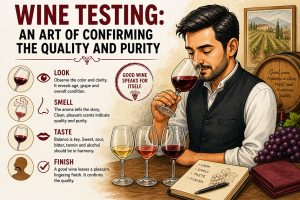
One Sip, No Lies: When Wine Reveals Its Truth.
At its core, wine tasting is about attention. The process begins even before the first sip. The colour of the wine offers the first clue. A clear, vibrant hue usually signals good condition, while a dull or cloudy appearance may suggest age, poor storage, or contamination. A deep ruby red or a bright straw yellow is not just visual appeal—it is the first indicator of character.
The next step is the aroma. Gently swirling the glass releases the wine’s bouquet, allowing its hidden layers to emerge. A well-made wine carries clean, pleasant aromas—fruity, floral, spicy, or earthy depending on its origin. Off-putting smells such as vinegar, dampness, or excessive sharpness can hint at spoilage or impurities. In many ways, the nose knows before the palate confirms.
Then comes the taste, the moment most people associate with wine. A balanced wine is neither too sweet nor too harsh. Its acidity, tannins, and alcohol should come together in harmony. When these elements are in sync, the wine feels complete, leaving a smooth and lingering finish. A flawed wine, on the other hand, may taste overly bitter, flat, or chemically sharp—signs that something is amiss in its making or preservation.
Purity in wine is not just about the absence of defects; it is about authenticity. Each wine carries the imprint of its soil, climate, and craftsmanship. This sense of place, often called “terroir,” is what makes wine unique. When a wine expresses this clearly, without distortion, it is considered pure.
Temperature and storage also play a silent role. Even a fine wine can lose its integrity if exposed to heat, light, or air for too long. Properly stored, it retains its intended flavour and aroma, allowing the taster to experience it as the maker intended.
What makes wine tasting an art is not complexity, but awareness. It does not demand expertise so much as curiosity. Anyone can learn to distinguish a fresh wine from a flawed one, a balanced blend from an unrefined brew. With time, the senses become sharper, and the experience more intuitive.
In the end, wine tasting is less about judgement and more about understanding. It is a quiet dialogue between the drinker and the drink, where sight, smell, and taste come together to reveal quality and purity. And in that moment of attention, what seems ordinary becomes something far more meaningful—a story told without words, lingering long after the glass is empty.
www.forevernews.in
