

Hormuz Crisis Deepens: Global Trade Faces Severe Disruption
The ongoing crisis in the Strait of Hormuz has emerged as one of the most significant threats to global trade in 2026, with far-reaching consequences for energy markets, shipping routes, and economic stability. What was once a critical but stable maritime corridor has now become a geopolitical flashpoint, disrupting the flow of goods across continents.
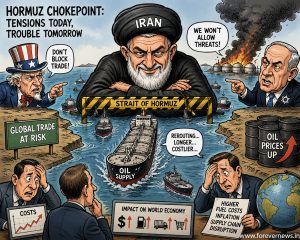
Hormuz Crisis Deepens: Global Trade Faces Severe Disruption.
The strait remains one of the world’s most vital energy chokepoints, handling nearly 20% of global oil and a substantial share of liquefied natural gas shipments. In normal conditions, a steady stream of vessels passes through the narrow waterway each day. However, ongoing tensions have sharply reduced maritime traffic, with many ships delaying transit or rerouting altogether due to rising security concerns.
The disruption stems from escalating tensions involving Iran, the United States, and Israel, which have intensified into a broader geopolitical standoff. The resulting uncertainty has forced shipping companies to reassess routes and risk exposure, effectively choking a key artery of global commerce.
The immediate impact has been visible in energy markets. Crude oil prices have surged past the $100 per barrel mark, reflecting fears of supply disruptions and prolonged instability. For energy-importing nations like India, this translates into higher import bills, inflationary pressures, and potential strain on fiscal balances.
Beyond oil and gas, the crisis is also affecting trade in fertilisers, petrochemicals, and other critical industrial inputs that move through the region. The disruption across multiple sectors is raising concerns about global supply chains, particularly in agriculture and manufacturing, where input costs are already under pressure.
Shipping and logistics have taken a significant hit. War-risk insurance premiums for vessels operating near the strait have risen sharply, while freight costs have climbed due to longer alternative routes. Many shipping firms are opting to bypass the region entirely, rerouting cargo around southern Africa, which adds both time and expense to global trade flows.
For India, the implications are particularly serious. As a major importer of crude oil and natural gas from Gulf countries, any disruption in Hormuz directly affects energy security and economic stability. Exporters, too, face higher logistics costs, potentially impacting competitiveness in global markets.
Looking ahead, even if tensions ease, the aftereffects of the crisis are likely to persist. Trade routes, insurance frameworks, and supply chain strategies may undergo lasting changes as businesses seek to reduce dependence on vulnerable chokepoints.
In essence, the Hormuz crisis has highlighted the fragile nature of global trade infrastructure. As geopolitical risks intensify, the world may be entering a phase where economic stability is increasingly shaped by strategic maritime security.