

Petrol Price Hike: Global Pressures, Domestic Cushioning and What Lies Ahead
Mumbai, May 1: Amid rising global crude oil prices and geopolitical tensions, concerns over a petrol price hike in India have resurfaced. While retail fuel prices remain largely unchanged for now, underlying economic pressures suggest that the situation may not remain stable for long.
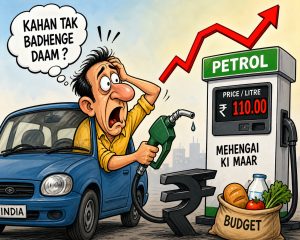
Petrol Price Hike Explained: Why India Is Holding Back Despite Global Surge.
Current Situation: Stability Despite Global Surge
Petrol prices in India have remained broadly stable even as global crude oil prices have surged to over $120 per barrel due to supply disruptions, particularly in key oil-producing regions.
In major cities, petrol continues to hover around ₹94–₹105 per litre, with Mumbai seeing prices above ₹103 per litre.
The government has indicated that there is no immediate plan to increase retail fuel prices, aiming to shield consumers from global volatility and inflationary pressures.
Why Prices Are Rising Globally
Several global factors are pushing crude oil prices upward:
- Geopolitical tensions: Conflicts affecting major oil routes have disrupted supply chains.
- Supply constraints: Reduced production in oil-exporting regions has tightened availability.
- Rising demand: Economic recovery and industrial growth have increased global energy consumption.
These factors have driven crude oil prices sharply higher in recent months.
India’s Position: Cushioning the Impact
India, as the world’s third-largest oil importer, remains highly sensitive to global price movements. However, the government and oil marketing companies have absorbed much of the increase to prevent a direct burden on consumers.
Retail petrol and diesel prices have remained largely unchanged for an extended period despite rising crude costs, resulting in pressure on oil companies’ margins and government finances.
The Hidden Cost: Fiscal and Corporate Strain
While consumers benefit from stable prices, the burden has shifted elsewhere:
- Oil companies face reduced profitability due to price controls.
- Government finances are impacted through subsidies and tax adjustments.
- Future risk remains, as analysts suggest a significant gap between global costs and domestic pricing.
Impact on the Economy
Fuel prices play a critical role in shaping inflation and economic activity. Any sharp increase could:
- Raise transportation and logistics costs
- Push up food and commodity prices
- Increase overall inflation
- Affect sectors such as aviation, logistics, and manufacturing
Rising input costs in related fuel segments already संकेत broader energy price pressures.
What Lies Ahead
The trajectory of petrol prices in India will depend on several key factors:
- Trends in global crude oil markets
- Government policy decisions
- Currency fluctuations
- Broader economic conditions
While price stability continues for now, sustained global volatility could eventually lead to a revision in domestic fuel prices.
Conclusion
India’s current fuel pricing approach reflects a careful balancing act—protecting consumers while managing economic realities. However, with global oil markets under pressure, the possibility of a future petrol price hike remains a key concern.