
Gen Z: Rewriting the Rules of Living, Spending, and Thinking
India’s Gen Z is no longer just a demographic category—it is a cultural force reshaping everything from consumption to careers, from relationships to aspirations. Born into a hyper-digital world and raised amidst economic uncertainty, this generation is not following the script written by millennials or Gen X. Instead, it is rewriting the rules altogether.
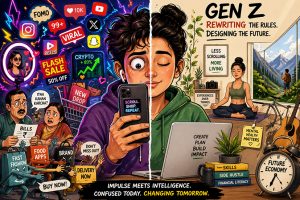
Gen Z: Rewriting the Rules of Living, Spending, and Thinking.
At the heart of this transformation lies a powerful shift: Gen Z is choosing intent over excess. Unlike previous generations that often equated success with accumulation, today’s youth are prioritising balance, wellness, and purpose-driven living. Whether it is mindful eating, reduced alcohol consumption, or a growing focus on mental health, Gen Z is quietly but firmly redefining what a “good life” looks like.
This mindset is also reshaping how they spend. By 2030, Gen Z is expected to command a staggering $1.3 trillion in consumption in India, making them the most influential consumer segment in the country. Yet, their spending is not blind or brand-loyal. Instead, it is experimental, value-driven, and deeply influenced by digital ecosystems. They are less interested in labels and more focused on solutions, often switching brands to find what suits their personal identity and needs.
Perhaps the most defining trait of Gen Z is its digital-first existence. Shopping is no longer a planned activity—it is an extension of scrolling. Social media platforms have effectively become marketplaces where trends are discovered, evaluated, and purchased within minutes. In India, “scroll-led discovery” has turned viral content into instant commerce, blurring the lines between entertainment and consumption.
This has led to a new economic behavior: impulse meets intelligence. While Gen Z is known for impulsive buying triggered by trends, it also exhibits a surprising awareness of quality, sustainability, and personal relevance. For instance, they may spend less in volume but opt for premium experiences—whether in fashion, travel, or even social drinking.
Another major shift is the rise of experience over ownership. Gen Z values memories more than material goods. Travel choices are evolving from party-centric vacations to wellness retreats and cultural explorations. Fitness, mental well-being, and self-care are no longer luxuries but essentials, with a significant portion of income being allocated to these areas.
Socially, Gen Z is breaking traditional boundaries. Gender-neutral fashion, inclusive beauty standards, and open conversations around identity are becoming mainstream. The rise in male grooming and genderless fashion trends signals a deeper cultural shift towards self-expression without labels.
However, this transformation is not without contradictions. Gen Z is often described as financially ambitious yet economically dependent, with a large share of spending still supported by family resources. It is a generation caught between aspiration and affordability, constantly negotiating its identity in a fast-changing world.
The Way Ahead
The future shaped by Gen Z will be digital, personalised, and purpose-driven. Businesses will need to move beyond traditional marketing and embrace authenticity, speed, and engagement. Governments and policymakers must recognise this shift, focusing on employment models, education systems, and urban planning that align with Gen Z’s expectations.
For society at large, the Gen Z wave signals a deeper transformation—one where success is not just measured by wealth, but by well-being, freedom, and meaning.
In many ways, Gen Z is not just adapting to the future.