
Prime Minister Narendra Modi’s recent international engagements have once again highlighted how India’s foreign policy has transformed from cautious diplomacy to assertive global positioning. Whether viewed through the lens of strategic partnerships, trade diplomacy, defence cooperation, energy security, or geopolitical balancing, the visit carried significance far beyond ceremonial optics.
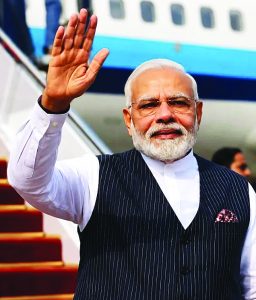
Prime Minister Narendra Modi’s recent foreign engagements underline India’s ambition to shape the global agenda.
At a time when the global order is witnessing deep fragmentation — from wars and economic nationalism to technology rivalries and energy insecurity — India is increasingly emerging as a stabilising force with independent strategic priorities. Modi’s recent visit reinforced this perception.
For India, diplomacy today is no longer limited to traditional statecraft. It has evolved into an instrument of economic expansion, technology acquisition, investment mobilisation, supply chain positioning, and geopolitical influence.
The outcomes of the visit therefore need to be assessed not merely through signed agreements, but through the broader strategic messaging India delivered to the world.
India’s Strategic Position Has Changed
Over the last decade, India’s global standing has undergone a visible shift. Earlier, India was often perceived as a balancing nation trying to avoid taking strong positions in major global conflicts. Today, India has positioned itself as a country capable of maintaining strategic autonomy while simultaneously deepening ties across multiple power centres.
This balancing ability has become one of New Delhi’s strongest diplomatic assets.
India maintains defence and energy ties with Russia, strategic partnerships with the United States, expanding trade with Europe, growing connectivity ambitions in the Middle East, and increasing engagement with the Indo-Pacific democracies.
Modi’s recent visit reflected this multi-alignment strategy.
The emphasis was not on ideological alignment but on practical cooperation — investments, defence manufacturing, energy partnerships, semiconductor collaboration, technology transfer, logistics connectivity, and trade expansion.
This marks a major evolution in India’s diplomatic thinking.
Economic Diplomacy at the Centre
One of the biggest takeaways from the visit was the growing centrality of economic diplomacy in India’s foreign policy.
India understands that geopolitical influence in the 21st century cannot be sustained without economic strength. The government’s outreach is therefore increasingly tied to attracting manufacturing investments, securing supply chains, expanding exports, and integrating India into emerging global industries.
The global business community today sees India as both a large market and a long-term manufacturing alternative amid shifting global supply chains.
This is particularly relevant as companies across the world seek to reduce excessive dependence on single-country manufacturing ecosystems.
India wants to position itself as the preferred destination for electronics, defence production, green energy, pharmaceuticals, digital services, semiconductors, and advanced manufacturing.
Modi’s diplomatic engagements repeatedly carried this message: India is open for business, politically stable, digitally transforming, and demographically positioned for long-term growth.
The visit also underlined India’s efforts to secure technology partnerships that could accelerate domestic industrial capacity.
Technology access today has become as strategically important as oil was in previous decades.
Countries that dominate artificial intelligence, semiconductor ecosystems, clean energy technologies, data infrastructure, and advanced manufacturing will shape future economic power.
India clearly does not want to remain merely a consumer market in that emerging order.
Defence and Security Dimensions
Another important dimension of the visit was security cooperation.
India’s geopolitical environment remains complex. Border tensions, maritime competition in the Indo-Pacific, cyber threats, terrorism concerns, and regional instability continue to shape national security priorities.
In this context, strengthening defence partnerships has become central to India’s foreign policy.
Recent diplomatic outreach indicates India’s dual objective — modernising military capabilities while simultaneously boosting domestic defence manufacturing.
The push for co-production, technology transfer, and indigenous manufacturing reflects the government’s long-term ambition to reduce import dependence.
This aligns closely with the broader vision of strategic self-reliance.
India today is not merely purchasing defence systems; it is increasingly negotiating partnerships that bring industrial and technological value into the domestic ecosystem.
The strategic messaging is equally important.
India is signalling that it intends to remain a major Indo-Pacific power capable of protecting its economic and maritime interests while contributing to regional stability.
Energy Security Remains Critical
The visit also highlighted another key reality — India’s future growth depends heavily on energy security.
As one of the world’s fastest-growing major economies, India’s energy demand is expected to rise sharply in the coming decades. Managing this demand while balancing affordability, sustainability, and geopolitical risks remains a difficult challenge.
India therefore continues to diversify energy partnerships across oil, gas, renewable energy, hydrogen, and nuclear cooperation.
Global conflicts have demonstrated how vulnerable energy-importing nations can become during periods of geopolitical instability.
The government’s approach appears aimed at ensuring that India remains insulated from major external shocks while accelerating its clean energy transition.
Renewable energy investments, green hydrogen initiatives, electric mobility ambitions, and grid modernisation are increasingly becoming part of India’s diplomatic conversations.
The world now recognises that India’s energy transition will significantly influence global climate outcomes.
India’s Rising Voice in the Global South
Perhaps the most politically significant aspect of Modi’s recent diplomacy is India’s attempt to position itself as the voice of the Global South.
Many developing nations today feel marginalised within existing global financial and political institutions. Issues such as debt stress, climate finance, food security, healthcare inequality, and digital access remain major concerns across Asia, Africa, and Latin America.
India has increasingly used global forums to amplify these concerns.
This approach has strengthened India’s credibility among developing nations that seek alternatives to both Western dominance and Chinese economic influence.
India’s developmental partnerships, digital public infrastructure model, vaccine diplomacy legacy, and capacity-building initiatives have enhanced its soft power.
The diplomatic outreach therefore carried symbolic importance beyond bilateral ties.
It projected India as a country attempting to bridge divides between advanced economies and emerging nations.
Domestic Political Significance
Foreign policy today also carries domestic political implications.
Modi’s international engagements often reinforce his political image as a global statesman capable of elevating India’s stature on the world stage.
For supporters, such visits reflect a confident India that commands respect internationally. For critics, questions remain regarding whether global visibility adequately translates into domestic economic gains.
Both arguments contain elements of truth.
International diplomacy alone cannot solve domestic challenges such as unemployment, rural distress, inflationary pressures, or inequality. However, strong diplomatic positioning can create economic opportunities, attract investments, improve technology access, and strengthen national confidence.
In an interconnected world, foreign policy and domestic development are increasingly linked.
The challenge for the government will be ensuring that diplomatic gains convert into measurable economic and social benefits for ordinary citizens.
The Road Ahead
India’s global moment appears real, but sustaining it will require careful execution.
The international system is becoming increasingly unpredictable. Great power rivalries are intensifying, global trade is slowing, protectionism is rising, and technology controls are reshaping economic relationships.
India must therefore navigate this environment with strategic patience.
The country’s biggest strength remains its ability to maintain credibility across competing geopolitical blocs while protecting national interests.
However, long-term influence will depend less on diplomatic symbolism and more on domestic delivery.
Sustained economic growth, infrastructure development, institutional stability, manufacturing competitiveness, educational reform, technological innovation, and social cohesion will ultimately determine India’s global standing.
Modi’s recent visit demonstrated that the world is increasingly willing to engage India as a major power.
But major-power status is not achieved through summit meetings alone.
It is built through consistent economic performance, strategic clarity, institutional strength, and national resilience.
India appears determined to move in that direction.
The coming decade will reveal whether the country can successfully convert diplomatic momentum into lasting geopolitical and economic influence.
For now, the message from India’s latest diplomatic outreach is unmistakable: New Delhi no longer sees itself as standing at the margins of global decision-making.
It wants a seat at the centre of the table. www.forevernews.in