

India’s push for sustainable urban development gained momentum with a nationwide rollout of electric vehicles for door-to-door waste collection under the Swachh Bharat Mission-Urban. The initiative replaces diesel-powered garbage trucks with zero-emission electric alternatives in cities like Guntur, Chennai, and Indore, delivering environmental gains while enhancing operational efficiency.
In Guntur, Andhra Pradesh, more than 200 electric autos have been deployed across 159 square kilometers, supported by the United Nations Industrial Development Organization and the Global Environment Facility. These GPS-equipped vehicles are expected to eliminate over 71,000 liters of diesel usage annually, cutting greenhouse gas emissions by an estimated 21,000 tons over the next decade. The program offers long-term cost savings and job creation while modernizing municipal waste management.
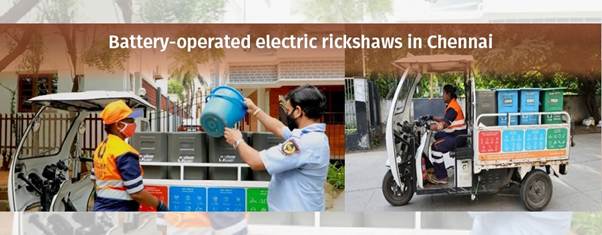
Chennai’s initiative features a fleet of 5,478 battery-powered electric rickshaws covering all 15 city zones, servicing more than 2.1 million households across 24,621 streets. With an average daily travel of 40 kilometers, these vehicles reduce around 41 tons of carbon emissions daily. Each rickshaw includes separate bins for wet, dry, and hazardous waste to support source-level segregation, while onboard audio systems raise public awareness on responsible waste disposal. The program has also created more than 6,000 jobs.
Indore, a consistent leader in India’s cleanliness rankings, has introduced 100 electric waste-collection vehicles focused on high-traffic areas like Rajwada. The shift is expected to slash carbon emissions by nearly 25,000 tons annually and save the city approximately $715,000 in fuel and maintenance costs. To power its fleet sustainably, the city built 20 solar charging stations equipped with 10kW panels, each generating up to 1,000 units of green energy daily, enough to recharge 80–100 vehicles.
These initiatives showcase the synergy between clean mobility, climate action, and urban sanitation. By integrating electric vehicles with real-time tracking and renewable energy infrastructure, Indian cities are modeling sustainable urban governance and reaffirming the Swachh Bharat Mission’s vision of garbage-free, pollution-free cities. The shift marks a significant step in India’s climate and environmental policy, offering scalable solutions for smart and resilient urban living.