



Forever News
The crude oil at $110 and the War Clouds: Can India Inc Still Deliver Double-Digit Earnings?
Mumbai, the financial capital where the corporate honchos are hobnob at the fluctuating oil resources, India Inc’s hopes of sustaining double-digit earnings growth are facing a fresh test as crude oil prices inch toward the $110-per-barrel mark amid escalating geopolitical tensions. For an economy that imports nearly 85% of its crude requirements, such a spike is more than a macro concern—it directly impacts corporate profitability, inflation, and consumer demand.
At the heart of the issue is India’s heavy dependence on global oil markets. Any disruption—particularly conflict in key producing regions like the Middle East or supply constraints influenced by blocs such as OPEC—tightens supply and pushes prices higher. A sustained rise to $110 could significantly widen India’s current account deficit and weaken the rupee, further increasing import costs.
For corporates, the implications are immediate and widespread. Sectors such as aviation, logistics, paints, chemicals, and FMCG are especially vulnerable. Companies like InterGlobe Aviation, which operates in a fuel-intensive business, may see margins shrink sharply as aviation turbine fuel (ATF) costs surge. Similarly, transport-heavy industries face rising freight costs, which are often passed on to consumers, risking demand compression.
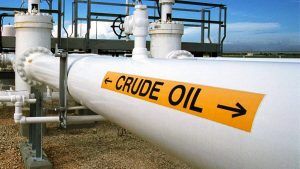
The crude oil at $110 and the War Clouds: Can India Inc Still Deliver Double-Digit Earnings?
The ripple effects extend to inflation. Higher fuel prices feed into retail inflation through transportation and production costs. This complicates the task of the Reserve Bank of India, which may be forced to maintain a tighter monetary stance for longer. Elevated interest rates, in turn, dampen corporate borrowing and investment cycles—key drivers of earnings growth.
Energy-intensive industries like cement, metals, and manufacturing could also face cost pressures. While some large firms may hedge crude exposure or pass on costs, smaller businesses often lack such buffers. This divergence could widen the performance gap within sectors, with large-cap firms weathering the storm better than mid- and small-cap players.
On the positive side, upstream oil companies and refiners could benefit from higher crude prices, partially offsetting the broader market impact. However, government intervention—such as fuel price controls or windfall taxes—could limit these gains, as seen in past cycles.
Investors are already recalibrating expectations. The benchmark indices BSE Sensex and NSE Nifty 50 may remain resilient in the near term, supported by strong domestic flows, but earnings downgrades could emerge if crude prices remain elevated for an extended period.
Ultimately, the path ahead hinges on the duration and intensity of the geopolitical crisis. A short-lived spike may be absorbed, but prolonged high crude prices could derail India Inc’s double-digit earnings trajectory. For now, companies and policymakers alike must brace for volatility, balancing growth ambitions against a rapidly shifting global energy landscape.
