



Crude Oil Shockwaves: How Rising Prices Are Reshaping the Global Economy
The global economy is once again feeling the tremors of crude oil volatility, as geopolitical tensions and supply disruptions push prices higher, raising fears of inflation, slower growth, and economic instability.
Recent developments in the Middle East have triggered a sharp spike in oil prices, with Brent crude crossing $110 per barrel—its highest level in recent years. The surge follows disruptions in key energy supply routes, including the Strait of Hormuz, a vital global oil transit corridor that handles a significant share of the world’s supply.
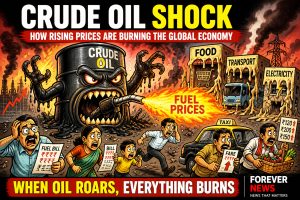
Impact of crude oil: Indian Wallet Under Pressure.
Inflation Pressures Mount Globally
Rising crude oil prices are directly feeding into inflation worldwide. Higher fuel costs are increasing transportation and manufacturing expenses, which are ultimately passed on to consumers.
The ripple effect is already visible across economies, with input costs for companies rising sharply. Businesses are increasingly faced with the difficult choice of absorbing higher costs or passing them on, leading to price hikes across sectors.
Economists warn that if oil prices climb further, the global economy could face a dangerous mix of high inflation and slow growth—commonly referred to as stagflation.
Growth Risks and Recession Fears
The impact of oil shocks extends beyond inflation. Elevated energy prices reduce consumer spending power and increase production costs, slowing overall economic activity.
Global growth projections are already under pressure, with concerns that prolonged high oil prices could significantly drag down economic expansion. Oil-importing countries such as India, Japan, and several European nations are particularly vulnerable, as higher import bills strain fiscal balances and weaken currencies.
Winners and Losers in the Oil Economy
While oil-importing nations face economic stress, exporting countries and energy companies tend to benefit from higher prices through increased revenues.
However, the gains are not without risks. Geopolitical instability and disruptions to infrastructure can affect production, creating uncertainty even for oil-producing regions.
Supply Disruptions and Global Uncertainty
The current situation highlights the fragile nature of global oil supply chains. Disruptions in major transit routes and production hubs can quickly tighten supply, pushing prices higher.
Such volatility has wider implications beyond fuel, impacting industries like agriculture, chemicals, and logistics, and contributing to rising costs of essential goods, including food.
A Structural Shift Underway
Despite the ongoing challenges, a gradual structural shift is underway. The adoption of renewable energy, electric vehicles, and energy-efficient technologies is beginning to reduce dependence on oil.
However, crude oil continues to remain a cornerstone of the global energy system, ensuring that its price movements will continue to influence economies worldwide.
The Bottom Line
Crude oil remains one of the most powerful forces shaping the global economy. Its price fluctuations affect inflation, growth, trade balances, and geopolitical dynamics.
As uncertainty persists, the trajectory of oil prices will remain a key factor determining the direction of the global economy in the coming months.
