
Forever News
Commodities in Flux: War, Rates and the New Investment Playbook
Global commodity markets are once again at the centre of the economic narrative, but this time the story is less about a broad-based boom and more about volatility, divergence and tactical opportunity. From crude oil to gold and industrial metals, price movements are being shaped by a complex interplay of geopolitics, monetary policy and shifting demand patterns.
At the heart of the current turbulence lies energy. Crude oil prices have firmed up amid escalating tensions in West Asia, with supply risks keeping markets on edge. The influence of producers’ groups such as OPEC continues to be significant, as output decisions and geopolitical developments combine to create a persistent risk premium. For India, a major importer, elevated crude prices translate into higher inflation and pressure on the rupee, with ripple effects across sectors.
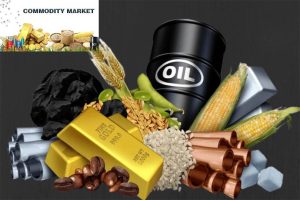
Commodity Market update
Yet, the energy story is not one-directional. Recent price swings—from sharp spikes to sudden corrections—highlight how sentiment-driven the market has become. For investors, crude is increasingly a trading asset rather than a long-term holding, demanding agility and risk management.
Precious metals, traditionally seen as safe havens, are also sending mixed signals. Gold has witnessed bouts of correction despite global uncertainty, reflecting the influence of higher interest rates and a strong dollar. Silver, often more volatile, has seen even sharper declines. The stance of central banks, including the Reserve Bank of India, remains crucial, as prolonged tight monetary conditions tend to cap the upside in bullion.
Still, the underlying demand for gold as a hedge against instability remains intact. In a world marked by geopolitical shocks and financial uncertainty, investors continue to view gold as a store of value, even if short-term movements appear erratic.
The base metals segment presents a more nuanced picture. Aluminium is emerging as a potential outperformer due to supply disruptions linked to geopolitical tensions, while copper—often seen as a barometer of global growth—has shown signs of weakness amid adequate supply and cautious demand outlook. Zinc and other metals are trading in tight ranges, reflecting a market that is balancing supply constraints against slowing industrial momentum.
What is becoming increasingly evident is that commodities are no longer moving in tandem. Instead, each segment is responding to its own set of triggers, making sector-specific strategies more relevant than ever.
For India, there is also a structural shift underway. The deepening of domestic commodity markets, including new derivative products and better price discovery mechanisms, is gradually attracting institutional participation. This evolution could make commodities a more mainstream asset class for investors, beyond their traditional role as a hedge.
The broader macro backdrop, however, remains critical. Three forces are shaping the trajectory of commodities: geopolitical tensions, global interest rate cycles, and currency movements. Any change in these variables can quickly alter price trends, making the market inherently unpredictable.
For investors, the message is clear. The current environment does not favour aggressive, one-sided bets. Instead, it calls for diversification, discipline and a tactical approach. Gold can serve as a long-term hedge, crude offers short-term trading opportunities, and selective exposure to metals may yield returns if supply disruptions persist.
In essence, the commodity market of 2026 is not defined by a supercycle but by strategic complexity. Those who adapt to this new reality—recognising volatility as an opportunity rather than a threat—are likely to navigate the cycle more successfully.