



India Tops Global Maritime Efficiency Chart, Emerges as Fastest Port Nation
In a milestone moment for the country’s logistics and infrastructure sector, India has emerged as the fastest port performer in the world, setting a new global benchmark in cargo handling efficiency.
According to the latest global logistics performance insights, India now leads the chart with an average turnaround time of just 0.9 days, overtaking major maritime hubs such as Singapore and the United Arab Emirates. This achievement places India ahead of traditionally dominant economies including Germany, the United States, and Australia.
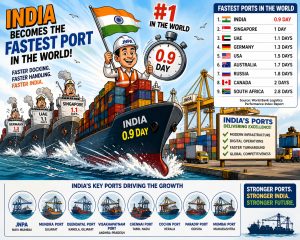
India docks first, the world follows.
A Turnaround Story at Sea
Not long ago, Indian ports were often associated with congestion, delays, and bureaucratic bottlenecks. Ships would spend days waiting to dock, unload, and depart. Today, that narrative has undergone a dramatic transformation.
Through sustained policy reforms, digitisation, and infrastructure upgrades, India has streamlined port operations to near-global best standards. Initiatives such as port modernisation, automation of cargo handling, and improved hinterland connectivity have played a crucial role in reducing turnaround time.
The result is clear: faster cargo movement, reduced costs for shipping companies, and increased attractiveness for global trade routes.
Beating the Global Giants
While Singapore, long considered a gold standard in port efficiency, clocks an average turnaround of around one day, India has edged ahead with even faster processing. Countries like Germany and the United States trail further behind, reflecting the scale of India’s recent gains.
This shift is not merely statistical—it signals a broader repositioning of India in global trade dynamics. Faster ports mean quicker exports and imports, directly boosting economic competitiveness.
Economic and Strategic Impact
Efficient ports are the backbone of a strong economy. With over 90% of India’s trade by volume moving through maritime routes, improvements in port efficiency have far-reaching implications.
- Boost to exports and manufacturing competitiveness
- Lower logistics costs for businesses
- Increased investor confidence in infrastructure capabilities
- Strengthened position in global supply chains
India’s emergence as the fastest port nation aligns with its larger ambition of becoming a global manufacturing and logistics hub.
The Road Ahead
While the achievement is significant, sustaining this lead will require continuous investment in technology, workforce training, and environmental sustainability. Green port initiatives and smart logistics systems will be key to maintaining momentum.
Conclusion
India’s rise to the top of global port efficiency rankings is more than just a logistics success—it is a symbol of systemic transformation. From delays to dominance, the journey reflects what focused policy, execution, and innovation can achieve.
As global trade looks for speed and reliability, India’s ports are no longer just gateways—they are now benchmarks.
