



May Day 2026: A Tribute to Workers and a Renewed Call for Dignity of Labour
Mumbai, May 1: Observed globally on May 1, May Day, also known as International Workers’ Day, remains a powerful reminder of the enduring struggle for workers’ rights and the vital role of labour in shaping economies and societies.
The origins of May Day trace back to the historic Haymarket Affair, where workers protested for an eight-hour workday—an event that became a defining moment in the fight for fair working conditions.
Today, the day is marked across India and the world to honour the contributions of workers—from industrial labourers and farmers to gig workers and professionals—who form the backbone of economic progress.
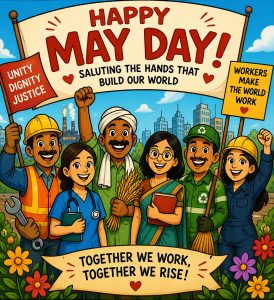
May Day 2026: A Tribute to Workers and a Renewed Call for Dignity of Labour.
In India, May Day continues to hold deep relevance amid ongoing challenges such as wage disparities, informal employment, and lack of social security for millions of workers. Labour organisations use the occasion to highlight pressing concerns including workplace safety, equitable pay, and the rights of those in the unorganised sector.
The day also carries historical significance in the country, having been first celebrated in Chennai in 1923, marking the beginning of organised labour awareness in India.
Beyond commemoration, May Day serves as a platform for advocacy. Across the globe in 2026, workers are once again raising their voices against rising living costs, inequality, and changing labour dynamics in the digital and gig economy.
While May 1 is observed as a public holiday in many parts of India—coinciding with Maharashtra Day—its deeper significance lies in recognising that the rights enjoyed today were hard-earned through collective struggle.
As India advances toward rapid economic growth and digital transformation, May Day stands as a reminder that inclusive development must prioritise the welfare, dignity, and rights of its workforce.
www.forevernews.in
