
The Government of India has launched a transformative scheme to bolster domestic manufacturing of electric passenger vehicles, cementing India’s position as a global hub for EV production. The initiative, spearheaded by the Ministry of Heavy Industries, aligns with India’s Net Zero 2070 goals, fostering sustainable mobility, industrial growth, and green energy adoption.
The scheme aims to attract fresh investments from global EV manufacturers, facilitating their entry into India’s fast-expanding electric vehicle market. Under the provisions, approved applicants will receive customs duty concessions, allowing the import of completely built-up electric four-wheelers with a minimum CIF value of USD 35,000 at a reduced duty of 15 percent for five years. Import limits are capped at 8,000 units per year, with carryover provisions for unused allocations.
To qualify, global manufacturers must commit a minimum investment of USD 500 million (Rs 4,150 crore) within three years, setting up domestic production facilities and ensuring domestic value addition (DVA) targets. Companies must achieve 25 percent local sourcing within three years and 50 percent within five years, reinforcing India’s Make in India and Atmanirbhar Bharat initiatives.
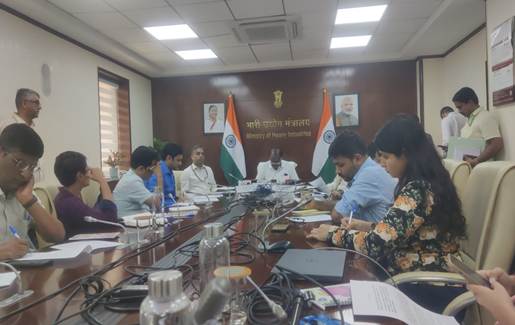
Union Minister H.D. Kumaraswamy, in his announcement, underscored the scheme’s role in advancing India’s industrial competitiveness, balancing foreign technological integration with indigenous innovation. Investments can be directed towards manufacturing plants, machinery, R&D, and charging infrastructure, while land purchases are excluded from eligible expenditures.
Approved applicants must submit a bank guarantee equivalent to the total duty foregone or USD 500 million, ensuring compliance with manufacturing commitments. Applications will be open for 120 days, and the government retains the right to extend the window until March 2026.
India’s initiative is expected to accelerate EV adoption, create jobs, and strengthen domestic supply chains, positioning the nation as a leading destination for sustainable automotive manufacturing in the coming decade.