
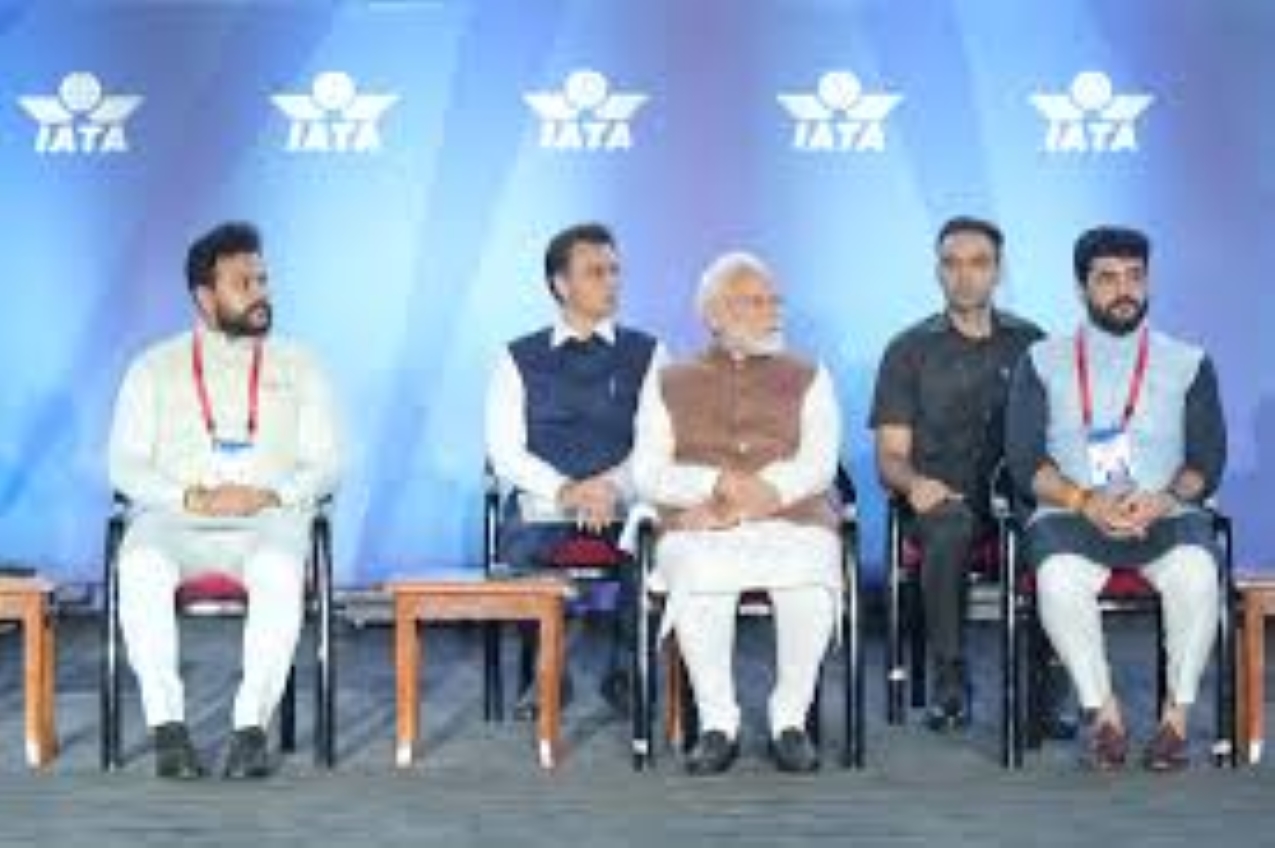
Prime Minister Narendra Modi underscored India’s rapid ascent in the global aviation sector while addressing the International Air Transport Association’s 81st Annual General Meeting and the plenary session of the World Air Transport Summit at Bharat Mandapam in New Delhi. The event marked a significant moment for India’s aviation industry, with Modi emphasizing the country’s role as a driver of innovation, policy leadership, and infrastructure expansion. The summit returned to India after 42 years, reinforcing the nation’s growing influence on global air transport strategies.
Modi declared that India is emerging as a force in the convergence of space and aviation, citing technological advancements and expanding market potential. He emphasized that the future of air travel goes beyond intercontinental journeys, pointing toward commercial space flights and interplanetary mobility. He described India as fully prepared to lead aviation’s transformation, driven by three foundational pillars: a vast and aspirational consumer base, a strong talent pool of innovators, and an open policy environment that fosters industrial growth.
The Prime Minister noted India’s civil aviation progress, stating that the country is now the world’s third-largest domestic aviation market. He hailed the UDAN scheme as a historic achievement, enabling more than 15 million citizens to access affordable air travel for the first time. Passenger traffic has surged to 240 million annually, surpassing the population of most countries, and is projected to reach 500 million by 2030. India’s cargo movement stands at 3.5 million metric tons annually, expected to rise to 10 million metric tons by the decade’s end.
Modi highlighted India’s focus on world-class airport infrastructure, noting that the number of operational airports has more than doubled since 2014, from 74 to 162. He pointed to the massive expansion of Indian airline fleets, with over 2,000 new aircraft ordered, reflecting industry confidence and growth. He described the sector as being at a takeoff point, poised for further advancements in sustainability, mobility, and equitable access.
India’s airports now handle 500 million passengers annually, integrating cutting-edge technology to enhance user experience. Modi emphasized that safety, efficiency, and sustainability remain priorities, with India transitioning toward sustainable aviation fuels and investing in green technologies. He urged global aviation leaders to observe India’s approach to balancing progress with environmental responsibility.
The Prime Minister promoted India’s Digi Yatra app as a model for digital aviation solutions, showcasing facial recognition technology for seamless travel without the need for paper documents or identity verification. He stated that Digi Yatra represents a secure and scalable solution that could serve as an inspiration for emerging economies.
Modi reiterated India’s commitment to strengthening its aviation regulatory framework and investment policies, referring to the Protection of Interest in Aircraft Objects Bill, which aligns India’s aviation laws with global best practices. The legislation has paved the way for international aircraft leasing companies to operate in India, while incentives at Gift City have further enhanced investment appeal.
He projected that India’s aircraft maintenance sector would become a major global hub by 2030, targeting a market valuation of four billion dollars. The number of MRO facilities has expanded significantly, supported by 100 percent foreign direct investment, tax rationalization, and a streamlined regulatory environment.
Modi emphasized that India is not merely an aviation market but an integral part of the global aviation supply chain, encouraging industry leaders to embrace both design and manufacturing in India. He praised the rising participation of women in aviation, noting that India has three times the global average of female pilots and the highest proportion of women in cabin crew and engineering roles.
Drone technology was cited as a critical driver of future aviation. Modi highlighted its role in expanding agricultural services and supporting women-led self-help initiatives. He stressed that India remains committed to aviation safety, aligning regulations with International Civil Aviation Organization standards. The recent ICAO audit reaffirmed India’s leadership in aviation security, further evidenced by the adoption of the Delhi Declaration at the Asia-Pacific Ministerial Conference.
Modi concluded by reaffirming India’s support for global connectivity under the Chicago Convention, advocating for an accessible and affordable air travel network. He urged aviation stakeholders to work toward solutions that elevate the industry while positioning India as a leader in aviation transformation. The summit drew over 1,600 international participants, including industry executives, government officials, and media representatives, marking India’s growing stature in global air transport.