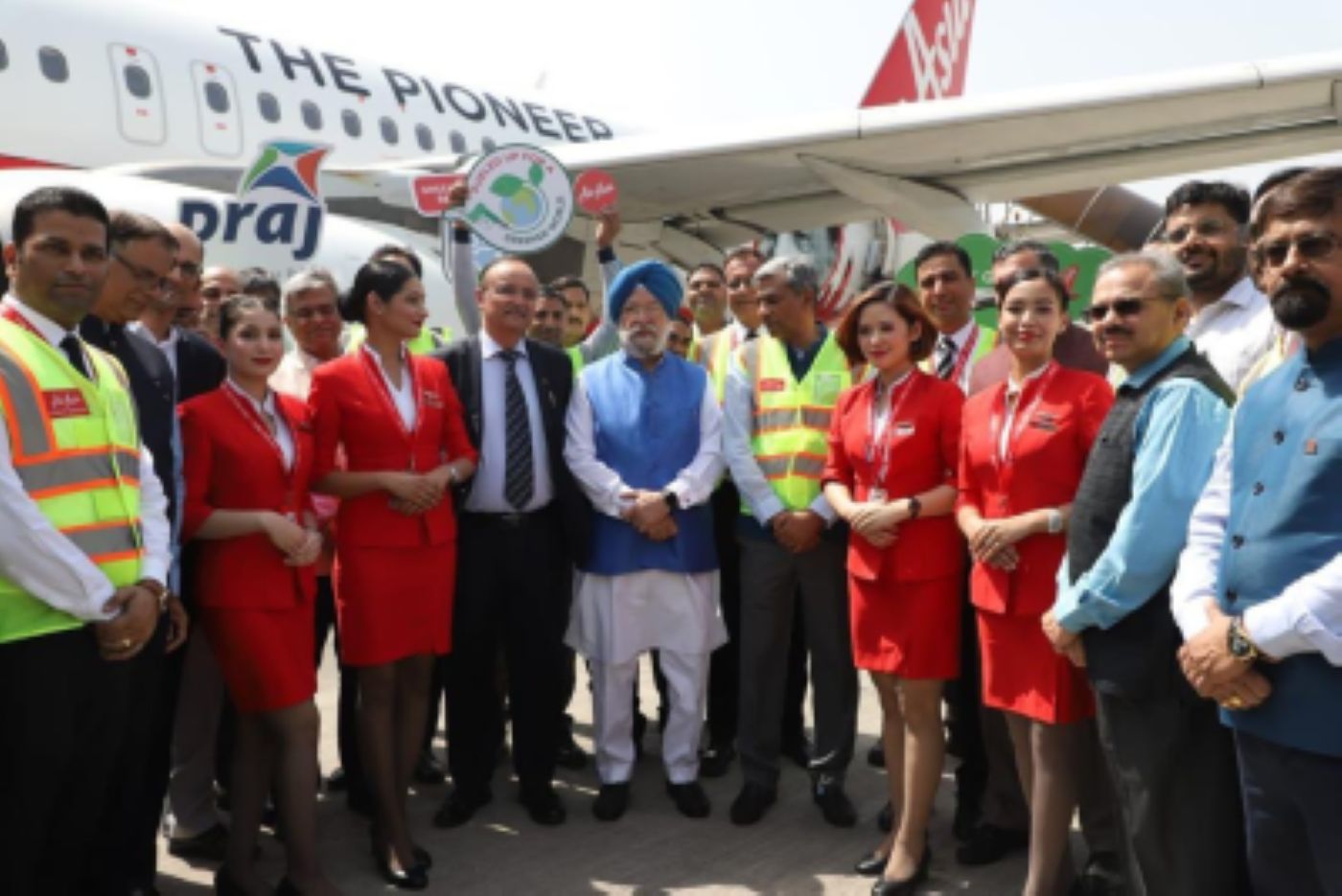

India’s aviation sector, currently the fifth-largest in the world, is on track to become the third-largest by 2030 and a global leader in Sustainable Aviation Fuel (SAF) production, according to a joint report released by the Federation of Indian Chambers of Commerce & Industry (FICCI) and KPMG.
The report outlines a strategic roadmap for scaling SAF production, leveraging India’s vast feedstock resources, including over 680 million metric tonnes of agricultural residue, 3.4 million metric tonnes of used cooking oil, and an ethanol production capacity exceeding 1,800 crore litres. These inputs position India to meet domestic demand and tap into premium international markets such as the European Union, Japan, Singapore, and the Middle East.
SAF has the potential to reduce lifecycle emissions by up to 80 percent, making it the most immediate and scalable decarbonization tool for the aviation industry. The report highlights government-mandated blending targets of 1 percent by 2027, 2 percent by 2028, and 5 percent by 2030, underscoring India’s commitment to cleaner skies.
Beyond environmental benefits, the report emphasizes economic gains including reduced fuel imports, job creation in green sectors, and increased income for rural communities. It calls for a coordinated systems approach that aligns policy, finance, technology, and offtake commitments to ensure successful implementation.
Anish De, Global Head of Energy, Natural Resources & Chemicals at KPMG in India, stressed the importance of integrated planning across stakeholders. Vivek Rahi, Partner and National Head of Oil & Gas at KPMG in India, added that India’s SAF journey will be powered by intelligent use of its abundant feedstock—from agricultural waste and municipal solid waste to press-mud and used cooking oil.
The report concludes that establishing viable supply chains and long-term offtake frameworks involving airlines, oil marketing companies, and technology providers will be critical to India’s emergence as a global SAF hub.