

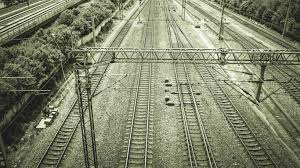
The Cabinet Committee on Economic Affairs (CCEA), chaired by Prime Minister Narendra Modi, has approved two multitracking projects for Indian Railways, aimed at improving travel convenience, reducing logistics costs, cutting oil imports, and lowering CO₂ emissions to support sustainable rail operations. These initiatives will expand India’s railway network by 318 kilometers across seven districts in Jharkhand, Karnataka, and Andhra Pradesh, at a total estimated cost of Rs 6,405 crore.
The projects will generate direct employment for approximately 108 million human-days during construction, significantly contributing to regional economic growth.
Approved Railway Expansion Projects
The first project, Koderma-Barkakana Doubling (133 km), passes through Jharkhand’s major coal-producing areas, serving as the shortest and most efficient rail link between Patna and Ranchi. The second project, Ballari-Chikjajur Doubling (185 km), spans Ballari and Chitradurga districts in Karnataka, and Anantapur district in Andhra Pradesh.
These upgrades will increase line capacity, enhance mobility, and improve operational efficiency within Indian Railways. As part of the PM-Gati Shakti National Master Plan for multi-modal connectivity, the projects reflect integrated planning for seamless movement of people, goods, and services.
Strategic Benefits and Environmental Impact
The projects will boost connectivity across 1,408 villages, serving a population of 28.19 lakh. The rail expansion is critical for transporting coal, iron ore, steel, cement, fertilizers, agricultural commodities, and petroleum products, with an expected capacity increase of 49 million tonnes per annum (MTPA) in freight traffic.
As an energy-efficient and environmentally friendly mode of transportation, Indian Railways will play a key role in achieving national climate goals. The enhanced network is projected to reduce oil imports by 52 crore liters and lower CO₂ emissions by 264 crore kilograms, equivalent to the plantation of 11 crore trees.
The government envisions these railway expansions as catalysts for regional self-reliance, fostering employment, self-sufficiency, and economic development under its vision for a New India.