

Saturday Blues: When the Weekend Becomes a Panacea for Urban Fatigue
In the relentless churn of urban life, Saturday has quietly evolved into more than just a day off—it has become a psychological release valve. For millions navigating the concrete sprawl of cities like Mumbai, Bengaluru, or Delhi, the weekend is no longer a luxury. It is a necessity—often seen as a panacea for the accumulated exhaustion of the week.
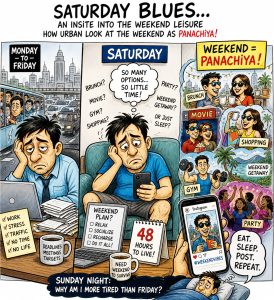
Saturday Blues: When the Weekend Becomes a Panacea for Urban Fatigue.
The Rise of “Saturday Blues”
Ironically, what was once eagerly awaited is now layered with expectation. The term “Saturday Blues” captures a modern paradox: the pressure to make the most of limited leisure time. Urban professionals, drained by five days of deadlines and digital overload, enter the weekend with an unspoken urgency—to relax, socialize, recharge, and somehow “live fully” in just 48 hours.
Yet, this pressure can backfire. The fear of wasting the weekend often leads to over-scheduling—brunches, movies, social gatherings, shopping, and side hustles—all crammed into a narrow window. By Sunday night, many find themselves more fatigued than refreshed.
Leisure as a Lifestyle Statement
In urban India, leisure has become aspirational. Cafés, malls, fitness studios, and curated experiences dominate the weekend landscape. A visit to a place like Bandra or Cyber Hub reveals a culture where leisure is not just about rest—it’s about display, identity, and belonging.
Social media amplifies this phenomenon. Weekends are documented, filtered, and shared, turning private downtime into public performance. The quiet joy of doing nothing is increasingly replaced by the need to be seen doing something.
The Urban Mindset Shift
For many city dwellers, weekends serve as emotional compensation. The structured, often monotonous workweek creates a longing for spontaneity. Saturday becomes a symbolic escape—whether through travel, indulgence, or simply sleeping in.
However, there’s a growing counter-trend. Minimalist leisure—slow mornings, digital detoxes, nature walks—is gaining traction. Urban residents are beginning to question whether the best use of the weekend is, paradoxically, to do less.
The Economics of Escape
The weekend economy is booming. Hospitality, entertainment, and retail sectors heavily depend on this two-day surge. From food delivery apps to micro-vacations, businesses have tapped into the urban desire for quick gratification.
But this also creates a subtle trap—leisure becomes transactional. The idea that relaxation must be purchased can deepen stress, especially among younger professionals balancing aspirations with financial realities.
Rethinking the Panacea
Is the weekend truly a cure for urban burnout? Or is it merely a temporary bandage?
The answer may lie in redefining leisure itself. Instead of treating Saturday as an escape from life, there is a growing need to integrate balance into everyday routines. After all, two days cannot realistically compensate for five days of imbalance.
Conclusion
Saturday, in the urban imagination, carries the weight of recovery, joy, and identity. But perhaps the real antidote to “Saturday Blues” is not in doing more, but in expecting less. In a world that constantly demands output, the simple act of pause may be the most radical—and restorative—choice of all.
www.forevernews.in