
PM Modi’s Call for Austerity: A Strategic Economic Shield or a Temporary Sacrifice?
As India navigates a volatile global economic environment marked by rising geopolitical tensions, unstable crude oil prices, currency pressures and growing uncertainty in international trade, Prime Minister Narendra Modi has reportedly urged citizens to embrace a spirit of economic discipline and national responsibility.
PM Modi’s Call for Austerity: A Strategic Economic Shield or a Temporary Sacrifice?
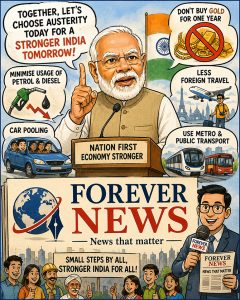
The appeal — centred around reducing non-essential consumption, limiting foreign travel, cutting dependence on imported luxury goods such as gold, conserving fuel, adopting car pooling, and increasing the use of metro rail and public transport — reflects a broader strategy aimed at strengthening India’s economic resilience at a critical global juncture.
Why Gold Purchases Matter
India remains one of the world’s largest importers of gold. While gold is deeply rooted in Indian culture and household savings patterns, excessive imports put immense pressure on the country’s foreign exchange reserves and widen the current account deficit.
When citizens purchase large quantities of imported gold, billions of dollars flow out of the Indian economy. During periods of global instability or high crude oil prices, this can weaken the rupee and strain the country’s external finances.
Economic experts believe that a temporary slowdown in gold imports could help India conserve foreign exchange reserves and stabilise the currency during uncertain times.
The Fuel Factor: Petrol, Diesel and India’s Import Burden
India imports nearly 85 percent of its crude oil requirements. Any spike in global oil prices directly impacts inflation, transportation costs, and household budgets.
Calls for minimising petrol and diesel consumption, encouraging car pooling, and increasing reliance on metro systems and public transport are not merely environmental suggestions — they are economic safeguards.
Reduced fuel consumption can:
- Lower India’s oil import bill
- Help control inflation
- Reduce pressure on the rupee
- Improve urban air quality
- Strengthen long-term energy security
The government’s push also aligns with India’s broader transition towards sustainable and green mobility.
Why Foreign Travel is Under Focus
Outbound tourism results in substantial foreign exchange outflow. With lakhs of Indians travelling abroad annually for leisure shopping and luxury spending, policymakers often view excessive outbound expenditure as avoidable during periods of economic caution.
Encouraging domestic tourism instead can help retain spending within the Indian economy while supporting local industries, hospitality businesses and employment generation.
Is India Facing an Economic Crisis?
Experts say the appeal should not necessarily be interpreted as a sign of panic or economic distress. Instead, it may be seen as a preventive economic strategy aimed at insulating India from external shocks.
Global conflicts, supply chain disruptions, rising commodity prices and uncertainty in international markets have compelled many nations to adopt cautious fiscal and consumption measures.
India’s leadership appears to be signalling that collective public participation in responsible consumption can strengthen national economic stability.
A Psychological Message of National Participation
Political observers note that such calls also carry symbolic importance. They create a sense of shared national participation during challenging global conditions.
From fuel conservation to mindful spending, the message appears designed to encourage citizens to think beyond personal consumption and contribute toward national economic preparedness.
The Larger Economic Narrative
India currently stands at a crucial growth juncture. The country aims to emerge as a major global manufacturing and economic power while simultaneously managing inflation, import dependence and external vulnerabilities.
The austerity message reflects a broader balancing act:
- Maintaining growth
- Protecting foreign reserves
- Managing inflation
- Reducing import dependency
- Promoting sustainable consumption
Whether these measures become temporary advisories or evolve into a larger national behavioural shift remains to be seen. However, the message clearly underlines one reality — in an interconnected global economy, even individual consumption choices can influence national economic stability.