



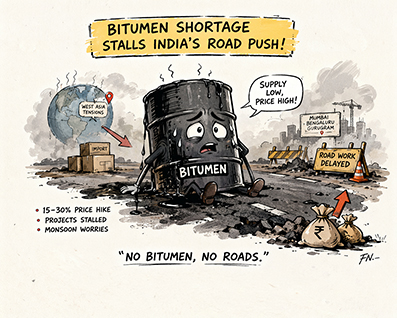
Bitumen Shortage Hits India’s Road Projects: Global Crisis Slows Infrastructure Push
From Mumbai to Bengaluru, a critical construction material crunch is stalling highways, delaying projects, and driving up costs across India
India’s ambitious road infrastructure push is facing an unexpected roadblock — a sudden and severe shortage of bitumen, the key petroleum-based material used in road construction and maintenance. From metro cities to national highway corridors, projects worth thousands of crores are slowing down, with contractors warning of delays, cost overruns, and even work stoppages.
A Crisis Triggered Beyond India’s Borders
Bitumen Shortage Hits India’s Road Projects.The root of the crisis lies far beyond India’s construction sites. Ongoing geopolitical tensions in West Asia have disrupted crude oil supply chains — directly impacting bitumen production and availability.
India relies heavily on imports for bitumen, with nearly 40% of its requirement sourced from abroad, largely from Gulf countries. With shipping routes under pressure and refinery outputs affected, supply has tightened dramatically. Contractors across the country report receiving only a fraction of their required material.
Projects Stalling Across Cities
The impact is already visible on the ground:
- In Mumbai, major expressway and urban road projects face delays as final surfacing work remains incomplete due to shortages.
- In Bengaluru, road repair and asphalting work has slowed significantly, with contractors struggling to procure supplies and facing delivery delays of weeks.
- In Gurugram, multiple road projects remain stuck despite approvals and funding, with execution halted due to lack of material.
Across several states, contractors say they are receiving barely 20–25% of required supply, severely impacting timelines.
Rising Prices Deepen the Crisis
The shortage has triggered a sharp spike in prices, further complicating the situation.
- Bitumen prices have risen 15–30% in recent weeks, with some regions reporting even higher increases.
- In several cities, rates have jumped from around ₹45,000–₹50,000 per tonne to over ₹60,000.
This surge is hitting contractors hardest, especially those operating under fixed-price government contracts signed before the escalation. Many are now reluctant to continue work, citing mounting financial losses.
Why Bitumen Matters So Much
Bitumen acts as the binding agent that holds road aggregates together — essentially the “glue” of road construction. Without it:
- New roads cannot be laid
- Existing roads cannot be repaired
- Pre-monsoon maintenance gets delayed
This is particularly worrying as India approaches the monsoon season, when poor road conditions can quickly deteriorate.
Infrastructure Targets Under Pressure
India has been aggressively expanding its road network, but the current crisis threatens to derail that momentum.
The pace of highway construction could slow further if supply constraints persist. State-level projects are especially vulnerable, as they often lack the procurement flexibility and buffer capacity available to central agencies.
Contractors Sound Alarm Bells
Contractor bodies across India are now demanding:
- Revision of contract rates
- Inclusion of escalation clauses
- Government intervention in stabilising supply
Without these measures, many warn that work could slow drastically or even come to a halt in some regions.
What Lies Ahead
The bitumen shortage highlights a deeper structural issue — India’s dependence on imported construction materials and vulnerability to global disruptions.
If the situation persists:
- Project delays could extend well into late 2026
- Infrastructure costs may rise significantly
- Urban road conditions could worsen, especially after the monsoon
The Bigger Picture
India’s infrastructure growth story has been a key driver of economic expansion. However, the current bitumen crisis underlines how global supply chain disruptions can directly impact domestic development.
Unless supply stabilises soon or viable alternatives are adopted, India’s road-building momentum may face a prolonged slowdown.
www.forevernews.in
