



Akshaya Tritiya: The Day Mumbai Tried to Buy Forever
In a city where time is money and space is a luxury, Akshaya Tritiya arrives each year like a shimmering promise—of wealth that never diminishes, of fortune that only multiplies.
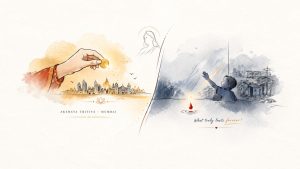
But this year in Mumbai, the story wasn’t just about gold.
At 7:00 AM, before the first local train screeched into Chhatrapati Shivaji Maharaj Terminus, the queues had already formed. Not for tickets, but for something far more enduring—gold coins, digital gold, even gold ETFs. From Zaveri Bazaar’s age-old shops to app-based investment platforms, the city was buying “forever.”
Inside a cramped jewellery store, 62-year-old Meena Deshpande clutched a tiny gold coin.
“Every year, just a little,” she smiled. “Not for wealth. For hope.”
Just outside, 28-year-old startup executive Rohan wasn’t buying gold at all. He was purchasing a fractional share in a tech stock.
“Same concept, right?” he shrugged. “Investment that grows.”
But step away from the glitter, and a different Mumbai emerges.
In Dharavi’s narrow lanes, Akshaya Tritiya had a quieter meaning. For daily wage workers, “akshaya” wasn’t about endless wealth—it was about uninterrupted work. No holiday, no shopping, just survival.
A young boy, Rajua., watched a TV through a shop window showing ads of gold offers.
“Why do people buy gold today?” he asked.
His father replied, “Because they can.”
The irony of Akshaya Tritiya in Mumbai is stark. A festival rooted in abundance unfolds in a city battling scarcity—of space, clean air, reliable infrastructure, and sometimes even dignity.
Trains overflow. Roads choke. Real estate prices soar beyond imagination. And yet, on this one day, the city pauses to believe in endless prosperity.
By evening, social media was flooded with images—gold bangles, पूजा thalis, investment screenshots.
But one post stood out.
A doctor from a public hospital wrote:
“Today, I didn’t buy gold. I donated blood. Maybe that’s my ‘akshaya’.”
Perhaps that’s the twist Mumbai needed.
Because what if “Akshaya” didn’t mean wealth that never decreases—but kindness that never runs out?
What if the city, instead of buying forever, built it?
