
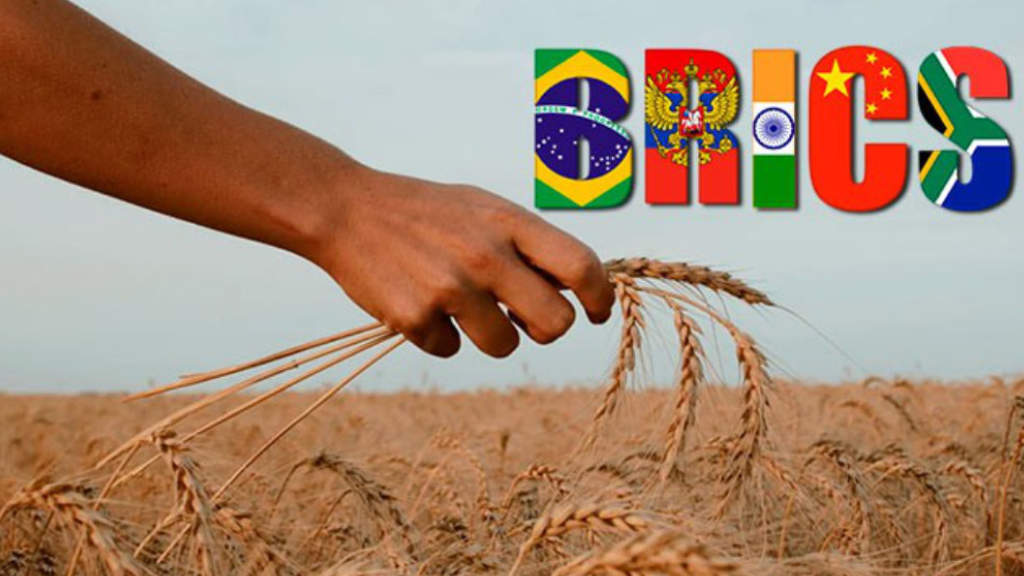
The Government of India has intensified its engagement in agricultural research and trade cooperation through the BRICS framework, aiming to enhance food security, promote sustainable farming practices, and strengthen international market access for Indian agri-products. Spearheaded by the Ministry of Agriculture and Farmers Welfare and the Indian Council of Agricultural Research (ICAR), this effort reflects a multi-track approach combining scientific exchange, export diversification and infrastructure development.
Central to India’s BRICS collaboration is the Agricultural Research Platform (BRICS-ARP), a virtual network launched during India’s presidency in 2021. This platform pools research capabilities from member countries and facilitates joint projects, pilot programs and training modules. Areas of cooperation include climate-resilient agriculture, precision farming, soil health management and crop diversification.
A major bilateral milestone was achieved in July 2025 when ICAR signed a Memorandum of Understanding with Brazil’s EMBRAPA, focusing on the development of climate-resilient, high-yield soybean varieties. This reflects India’s strategic push toward crop science innovation and adaptive farming technologies.
To augment trade partnerships and expand market opportunities, the government is implementing the Agriculture Export Policy with a focus on resolving supply chain bottlenecks, advancing product diversification and upgrading logistics systems. This includes cold chain modernization aimed at cutting post-harvest losses and improving export shelf-life.
Indian diplomatic missions are playing a proactive role in organizing buyer-seller meets and facilitating trade dialogues. Commodity Boards such as the Tea Board and Coffee Board are conducting promotional campaigns abroad in coordination with exporters and trade associations. The government is also supporting exporters with compliance and certification efforts aligned to global sanitary and phytosanitary standards. An electronic e-Phyto certification system has been adopted to improve transparency and reduce time and cost in certificate exchange processes.
India is strengthening the export value chain through sea protocols for perishable produce, enhanced packaging, digital traceability, and promotion of Good Agricultural Practices. Assistance is provided for international safety certifications and training programs targeted at both farmers and exporters.
Indian agri-products are being showcased across prominent global platforms, including BIOFACH, AAHAR, Gulfood, Indus Food, and the Organic and Natural Products Expo. Additionally, the World Food India platform has been positioned to attract investment and expand international exposure for domestic food processing enterprises.
Bilateral Joint Working Groups with select countries have been formed to collaborate on food processing technologies, cold chain solutions, automation, food parks and institutional linkages. On the infrastructure front, the government is implementing schemes such as the Agro-Processing Cluster Scheme and Integrated Cold Chain Scheme, alongside other food preservation initiatives to improve export competitiveness.
These strategic moves collectively aim to embed India’s agri-sector deeper into global trade and research ecosystems, while enhancing product quality, processing capabilities and the scientific foundation for long-term agricultural resilience.