

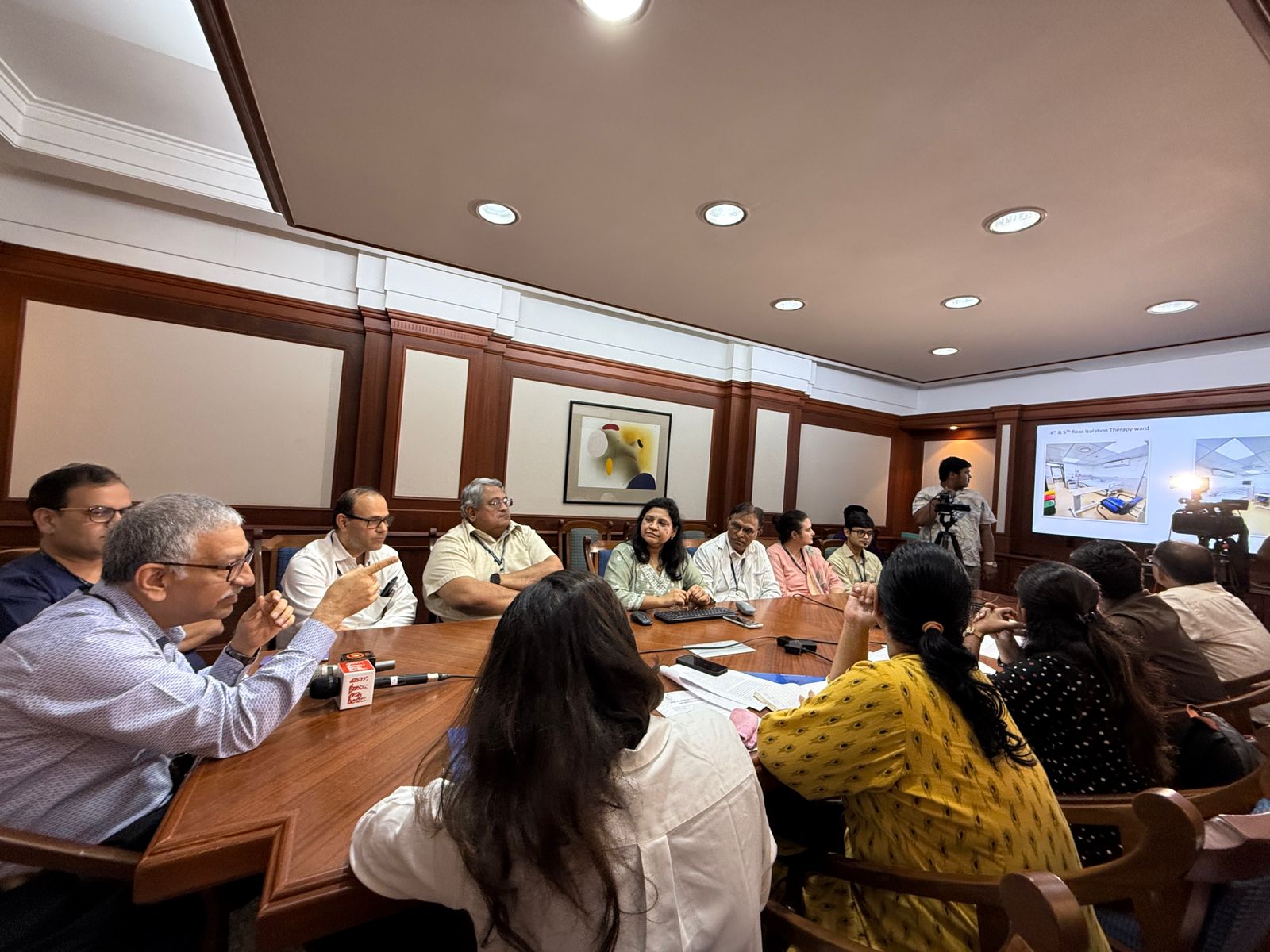
India has achieved a major milestone in paediatric oncology with the successful administration of the country’s first high-dose 131I-mIBG therapy for neuroblastoma at the Advanced Centre for Treatment, Research and Education in Cancer (ACTREC), Tata Memorial Centre. The patient, a 17-year-old boy with relapsed high-risk neuroblastoma, received the therapy on 5 May 2025, followed by an autologous hematopoietic stem cell infusion on 29 May. According to Tata Memorial Centre Director Sudeep Gupta, the patient is currently doing well.
High-dose 131I-mIBG therapy is a critical treatment for children with high-risk neuroblastoma, particularly in cases where other therapies have failed. While India’s standard regulatory limit is 5 mCi/kg (up to 300 mCi), ACTREC administered a supra-high dose of 800 mCi—made possible by special approval from the Atomic Energy Regulatory Board (AERB). This is the highest dose ever administered for this therapy in the country.
The comprehensive procedure was a multidisciplinary effort involving the Departments of Nuclear Medicine, Paediatric Oncology, Haematological Oncology (Bone Marrow Transplant Unit), and Transfusion Medicine. Guidance on protocol development was also sought from international experts at Memorial Sloan Kettering Cancer Centre, New York.
The therapy required intricate pre-treatment planning to ensure radiation safety for both the patient and hospital staff. Physicists and radiation safety officers conducted simulation experiments to predict exposure levels. Shielding protocols and additional monitoring systems were deployed in ACTREC’s custom-designed isolation ward equipped with lead-lined infrastructure. The radioactive dose was fractionated and administered by two nuclear medicine physicians, adhering to the ALARA (As Low As Reasonably Achievable) safety principle.
The expected post-treatment drop in the patient’s blood count was managed with a stem cell transplant conducted on day 24 post-therapy. The transplant was successful, and the patient’s blood counts have recovered.
Tata Memorial Centre officials lauded the achievement as the product of exceptional teamwork. Director Gupta commended the contributions of ACTREC Director Pankaj Chaturvedi, TMH Director C. S. Pramesh, and the collaborative efforts of clinicians, physicists, technicians, nurses and support staff.
Given the high cost and limited accessibility of certain neuroblastoma treatments like anti-GD2 immunotherapy, high-dose MIBG therapy is being explored as a potent, cost-effective option for improving patient survival rates in India. The Tata Memorial Centre plans to scale up routine use of this therapy for eligible patients going forward, using the current case as a national benchmark.
This breakthrough is expected to significantly enhance India’s paediatric cancer care capabilities and provide a new lifeline for children battling aggressive forms of neuroblastoma.