

How AI Is Transforming the Global Ease of Doing Business
By Forever News Desk
Artificial Intelligence is quietly changing one of the most important aspects of the global economy: how easily a business can be started, operated and expanded.
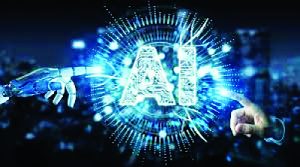
AI is transforming global business by reducing paperwork, improving productivity, breaking language barriers and helping MSMEs compete internationally.
For decades, doing business across borders meant paperwork, consultants, multiple approvals, expensive technology, language barriers and large teams. AI is now beginning to remove many of these barriers.
From a small entrepreneur in Mumbai to a global corporation in New York, businesses can increasingly use AI to research markets, communicate with customers, analyse data, prepare documents, automate accounting and reach international markets.
From paperwork to intelligent automation
One of the biggest advantages of AI is its ability to automate repetitive administrative work.
Invoices, contracts, reports, customer queries, compliance documents and business correspondence can increasingly be processed with AI-assisted systems. This allows employees to spend more time on decision-making, innovation and customer relationships.
For small and medium enterprises, this could be transformative. Businesses that once needed specialised teams for several functions can now access affordable AI-powered tools.
Borders are becoming less important
Language has traditionally been a major barrier to international trade.
AI-powered translation and communication tools are making it easier for businesses to communicate with customers, suppliers and partners across different languages.
A small Indian manufacturer can potentially market its products to customers in Europe, Japan or Latin America without building separate communication teams for every market.
AI is therefore helping create a more borderless business environment.
Market intelligence at everyone’s fingertips
Earlier, large corporations had an advantage because they could afford expensive market research.
AI is changing that equation.
Businesses can analyse customer behaviour, competitor activity, pricing trends and market opportunities much faster. Entrepreneurs can use AI to compare markets, identify potential customers and develop business strategies.
The advantage is particularly significant for startups and MSMEs, which traditionally operated with limited information and resources.
Faster customer service
AI-powered chatbots and virtual assistants can operate around the clock, answering customer questions, processing routine requests and providing information instantly.
For global businesses operating across multiple time zones, this means that customer service no longer has to stop when the office closes.
The result can be faster response times and lower operating costs.
AI and global supply chains
Supply chains are becoming increasingly complex. Businesses need to manage inventory, logistics, demand forecasting and procurement across multiple markets.
AI can analyse enormous amounts of information and identify patterns that may be difficult for humans to detect.
Better forecasting can reduce excess inventory, prevent shortages and improve logistics planning.
For manufacturers and exporters, this could translate into greater efficiency and competitiveness.
The rise of the one-person enterprise
Perhaps the most interesting development is the emergence of the AI-enabled entrepreneur.
A small business owner can use AI for market research, content creation, customer communication, financial analysis, advertising, translation and basic administrative tasks.
This does not eliminate the need for people. Instead, it allows a small team to perform functions that previously required much larger organisations.
The result could be a new generation of highly efficient micro and small enterprises competing in international markets.
But AI brings new challenges
The transformation is not without risks.
Businesses must deal with data privacy, cybersecurity, misinformation, intellectual property, algorithmic bias and the possibility of inaccurate AI-generated information.
There is also a growing concern that companies adopting AI faster could widen the gap between technologically advanced businesses and those that lack access to digital infrastructure and skills.
Governments will therefore have an important role in creating clear regulations, digital infrastructure and AI-skilling programmes.
India has an opportunity
For India, AI could become a major competitive advantage.
The country has a large technology workforce, a growing startup ecosystem, a vast domestic market and millions of MSMEs.
If AI adoption reaches smaller businesses—not just large technology companies—it could significantly improve productivity and reduce the cost of doing business.
An Indian MSME using AI for accounting, translation, customer service, marketing and international sales can potentially compete with businesses several times its size.
From ease of doing business to ease of intelligent business
The next phase of global commerce may not simply be about making it easier to start a company.
It will be about making it easier to run a smarter company.
AI is reducing the cost of information, speeding up decisions, automating routine work and lowering some of the traditional barriers between businesses and international markets.
The winners of the AI era may not necessarily be the companies with the biggest workforce or the largest offices.
They may be the companies that learn how to combine human judgement with machine intelligence most effectively.
The global business environment is being rewritten—and this time, the transformation is happening not only in boardrooms, but on the laptops and smartphones of millions of entrepreneurs.
Forever News — News That Matters