



E20 Fuel Safe for Compatible Vehicles, Extensively Tested Before Rollout: BPCL Experts
Mumbai, July 4 (Forever News): Concerns over the use of E20 (20 per cent ethanol-blended petrol), including apprehensions about engine performance, corrosion of gaskets and other vehicle components, were addressed by experts during a media interaction organised by the Press Information Bureau (PIB), Mumbai, on Saturday.
The interactive session, moderated by Ms. Smita Vats Sharma, Director General, PIB Mumbai, featured technical presentations and an open question-and-answer session with media representatives. The discussion was led by BPCL experts Rajkumar Dubey, former Chairman of BPCL and Director, and R. Ramachandran, former Director
The interactive session, moderated by Smita Vats Sharma (seated in the center), Director General, PIB Mumbai, featured the technical presentation. Seated to her right is Rajkumar Dubey, former Chairman of BPCL and Director BPCL , and R. Ramachandran, former Director (Refineries), BPCL..
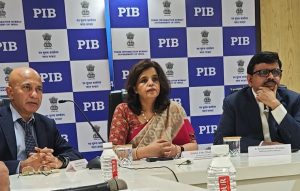
(Refineries), BPCL.
The experts explained the scientific and technical basis of the Government of India’s ethanol blending programme and clarified several misconceptions surrounding E20 fuel.
During the interaction, journalists and vehicle owners raised questions on the long-term impact of E20 on engines, fuel systems, rubber gaskets, seals and vehicle performance. Participants also sought clarification on fuel efficiency, maintenance costs, compatibility with older vehicles and manufacturer warranties.
Responding to these concerns, the experts stated that E20 fuel was introduced only after comprehensive laboratory testing, field trials and technical evaluations carried out jointly by oil marketing companies, automobile manufacturers and research institutions. They emphasised that the rollout followed extensive validation to ensure safe usage in compatible vehicles.
The officials clarified that modern vehicles designed or certified for E20 fuel are engineered with materials compatible with higher ethanol blends. Components such as fuel lines, seals and gaskets have been evaluated to withstand the fuel’s characteristics, they said.
The discussion also highlighted the broader objectives of India’s ethanol blending programme, including reducing dependence on imported crude oil, strengthening the country’s energy security, lowering vehicular emissions and providing additional income opportunities to farmers through increased demand for ethanol feedstock.
Experts noted that ethanol blending forms an important part of India’s transition towards cleaner and more sustainable transportation fuels while supporting the nation’s environmental and economic goals.
The session witnessed active participation from journalists representing print, electronic and digital media, with several technical queries being addressed in detail. Officials reiterated that consumer awareness and factual information are essential for the successful adoption of E20 fuel and encouraged the public to refer to vehicle manufacturer recommendations regarding fuel compatibility.
The interactive programme concluded with a reaffirmation that the Government, oil marketing companies and automobile manufacturers continue to monitor the implementation of the E20 programme and remain committed to ensuring quality, safety and consumer confidence.
