


Great Nicobar Project to Boost India’s Maritime Power, Counter China’s Strategic Expansion
New Delhi: India’s ambitious Great Nicobar Project is emerging as a major strategic and economic initiative aimed at strengthening the country’s maritime influence in the Indo-Pacific while reducing dependence on foreign transshipment hubs such as Colombo, Singapore and Klang.
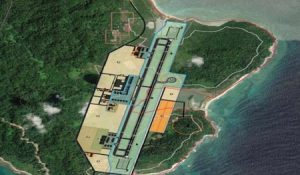
Great Nicobar Project to Boost India’s Maritime Power, Counter China’s Strategic Expansion.
The project, currently under development, seeks to transform Great Nicobar Island into a key maritime and logistics hub by leveraging its strategic proximity to one of the world’s busiest East-West international shipping routes in the Andaman Sea.
Located barely 40 nautical miles from the crucial shipping corridor and blessed with a natural water depth exceeding 20 metres, the proposed transshipment port at Galathea Bay is expected to handle large cargo vessels and attract both gateway and transshipment traffic.
Strategic experts believe the project could significantly enhance India’s geopolitical leverage in the Indian Ocean region, especially at a time when China is aggressively expanding its maritime footprint across Asia and Africa.
Former Indian Army officer and military diplomat Brigadier Sanjay Iyer (Retd.) described the Great Nicobar initiative as one of India’s most significant strategic bets in decades. According to him, the project would provide India with a stronger and more continuous presence in the eastern Indian Ocean while improving surveillance and maritime awareness across critical trade routes.
The island’s location near the Strait of Malacca — one of the world’s busiest maritime chokepoints — is considered strategically crucial. A substantial portion of global trade and energy supplies pass through this narrow route, including a major share of China’s oil imports and maritime commerce.
Analysts say this creates a strategic vulnerability for Beijing, often referred to as the “Malacca Dilemma,” since China heavily depends on shipping lanes it does not directly control.
Experts believe that while India is unlikely to disrupt maritime movement during peacetime, the infrastructure at Great Nicobar would significantly improve India’s capability to monitor naval and commercial activity between the Indian Ocean and the western Pacific region.
The project also reflects India’s broader attempt to position itself as a stronger maritime power in the Indo-Pacific. Observers note that while China has rapidly expanded its overseas port and naval infrastructure in countries such as Sri Lanka, Pakistan and Djibouti, India has until now underutilised the strategic potential of the Indian Ocean.
The proposed International Container Transhipment Port (ICTP) at Galathea Bay forms a key component of the holistic development plan for Great Nicobar Island. The project also includes a proposed airport, township and power infrastructure aimed at creating a modern maritime and economic ecosystem in the region.
India’s existing ports currently lack sufficient deep-water berths capable of handling the world’s largest container ships, forcing a significant portion of Indian cargo to be routed through foreign ports. Officials and analysts believe the Great Nicobar Project could help India reclaim a substantial share of this trade and reduce logistical dependence on regional competitors.
At the same time, authorities have stressed that the development will incorporate environmental safeguards and measures to protect indigenous tribal communities inhabiting the ecologically sensitive island region.
For more updates, visit Forever News
