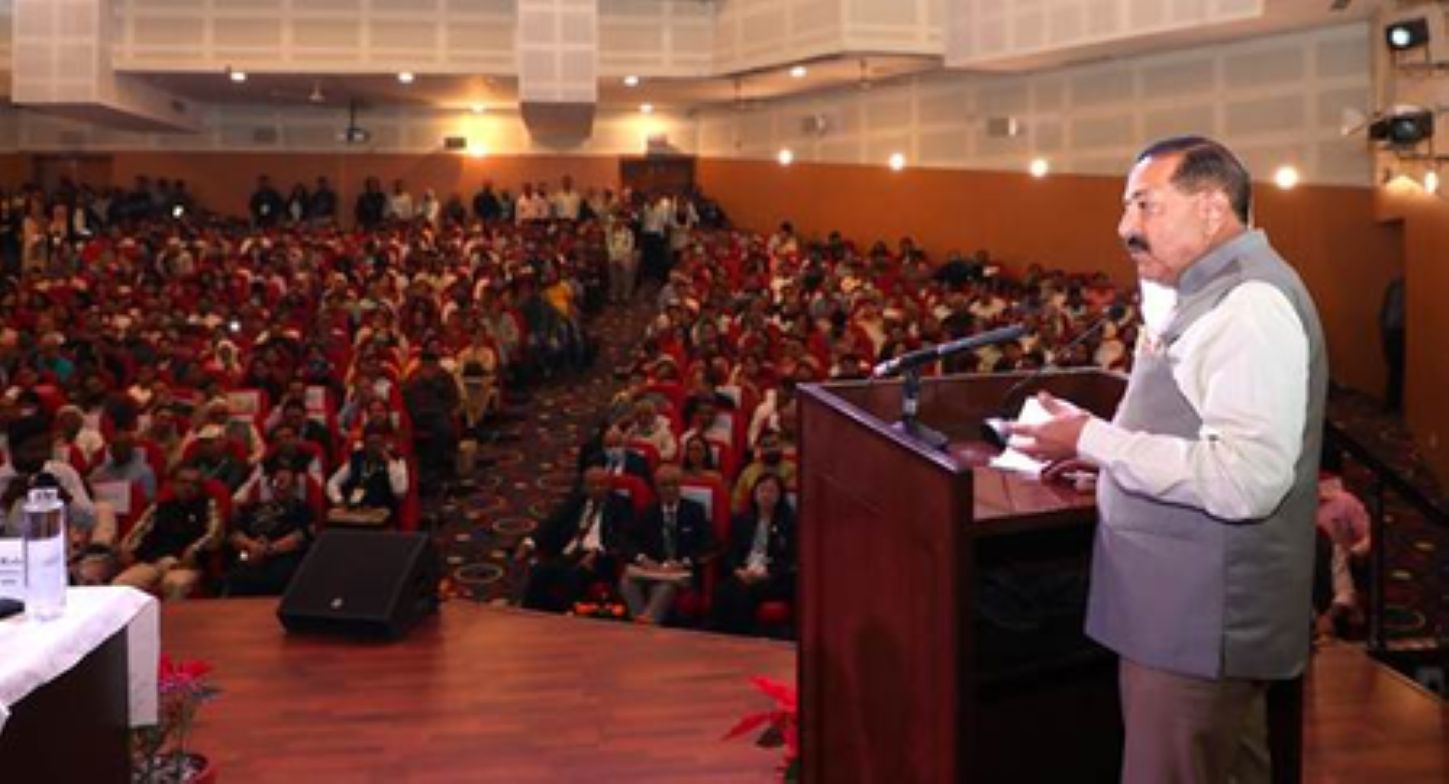

India is positioning itself as a global leader in aligning economic development with environmental sustainability, driven by Prime Minister Narendra Modi’s vision to achieve net-zero emissions by 2070 and promote eco-conscious living through the LiFE—Lifestyle for Environment—movement. Speaking at the inaugural session of the Asian Conference on Geography (ACG 2025) at Jamia Millia Islamia, Jitendra Singh said the conference arrives at a critical juncture, tackling the intertwined challenges of climate change, urbanization, and sustainable resource management.
Singh praised Jamia Millia Islamia for hosting the first-ever edition of the prestigious conference in India and commended Vice Chancellor Mazhar Ali and the organizing team for convening global experts, academics, and students to deliberate on pressing environmental issues. He noted that Asia, while a hub of industrial and economic dynamism, accounts for over half of the world’s greenhouse gas emissions and faces mounting vulnerability to extreme weather events.
Referencing the IPCC Sixth Assessment Report, Singh warned that if emissions continue unchecked, the region will experience intensified heatwaves, floods, and water stress. He highlighted that South Asia alone has over 750 million people exposed to severe climate hazards, with megacities like Delhi, Dhaka, Bangkok, and Manila projected to be among the most climate-vulnerable by 2050.
Urbanization, Singh said, though emblematic of progress, has created serious challenges due to unplanned expansion, encroachment on floodplains, groundwater depletion, and rising pollution. He cited the 2014 Srinagar floods as a case where human negligence exacerbated a natural disaster. He shared troubling statistics, including that nearly 80 percent of wastewater in developing Asian countries is discharged untreated, and urban India generates over 55 million tonnes of solid waste annually, growing at 5 percent each year.
Singh emphasized the transformative potential of waste-to-wealth technologies and circular economy models, envisioning a future where the concept of waste itself disappears. He cited successful community-level initiatives from Dehradun, such as recycling used cooking oil, which not only support environmental goals but also generate income.
He concluded by stressing that public participation is essential for meaningful change, stating that “unless there is a social movement, no amount of policy or seminar will yield optimal results.”