
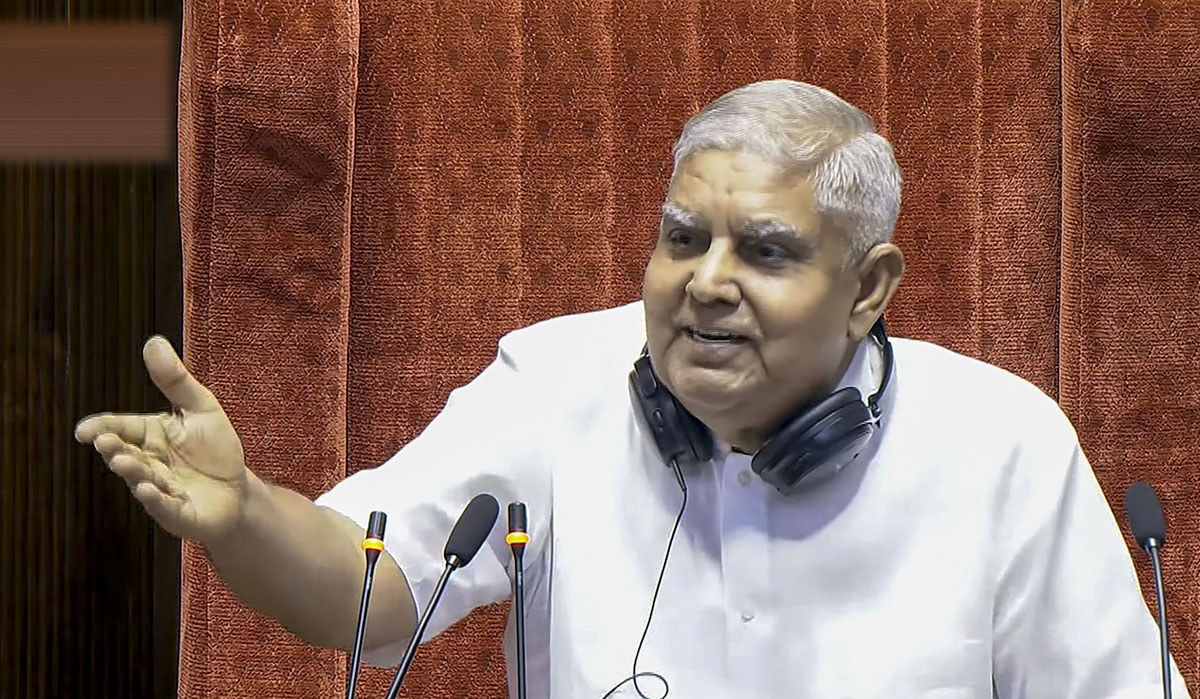
Vice-President Jagdeep Dhankhar issued a sharp reminder of India’s Emergency era, calling the Supreme Court’s 1976 judgment upholding the Emergency “the darkest in judicial history.” Speaking to Rajya Sabha interns, he emphasized that more than 100,000 citizens were jailed within hours, the media was censored, and constitutional safeguards collapsed. Highlighting how the President then acted unilaterally on the Prime Minister’s advice, Dhankhar said it violated the constitutional mandate that decisions must originate from a full Council of Ministers.
He recounted how many detainees later became Prime Ministers, Chief Ministers, and national leaders, and lamented the judiciary’s failure when nine High Court rulings upholding fundamental rights were overruled. He said the Supreme Court’s verdict legitimized dictatorship, allowing Emergency to persist unchecked.
Marking the upcoming 50th anniversary of that midnight decision on June 25, 1975, Dhankhar noted that the current government formally declared the day as ‘Samvidhaan Hatya Diwas’ through a notification on July 11, 2024. He urged citizens to be “guardians and watchdogs of democratic values” and to reflect on the cost paid for India’s freedom and republicanism.
Turning to spiritual and cultural heritage, he stressed that India believes in religious freedom by choice, not by allurement or coercion, warning against inducements that threaten civilizational cohesion. On the eve of International Yoga Day, Dhankhar praised yoga as Bharat’s gift to the world, rooted in Atharvaveda and wellness traditions. He recalled how Prime Minister Modi’s 2014 address to the UN sparked a resolution adopted by 177 nations, leading to the global recognition of June 21 as International Yoga Day.
Calling yoga a practice “not limited to one day,” Dhankhar urged youth to embrace it as a lifelong path to clarity, resilience, and inner peace.