
India’s self-reliance in defence is no longer a strategic choice but a condition for survival, declared Defence Minister Rajnath Singh at the Defence Conclave themed ‘Warfare in the 21st Century’. Addressing the audience in New Delhi, Singh emphasized that in an era shaped by terrorism, pandemics, trade wars, and regional conflicts, sovereignty demands indigenous capability—not protectionism, but autonomy.
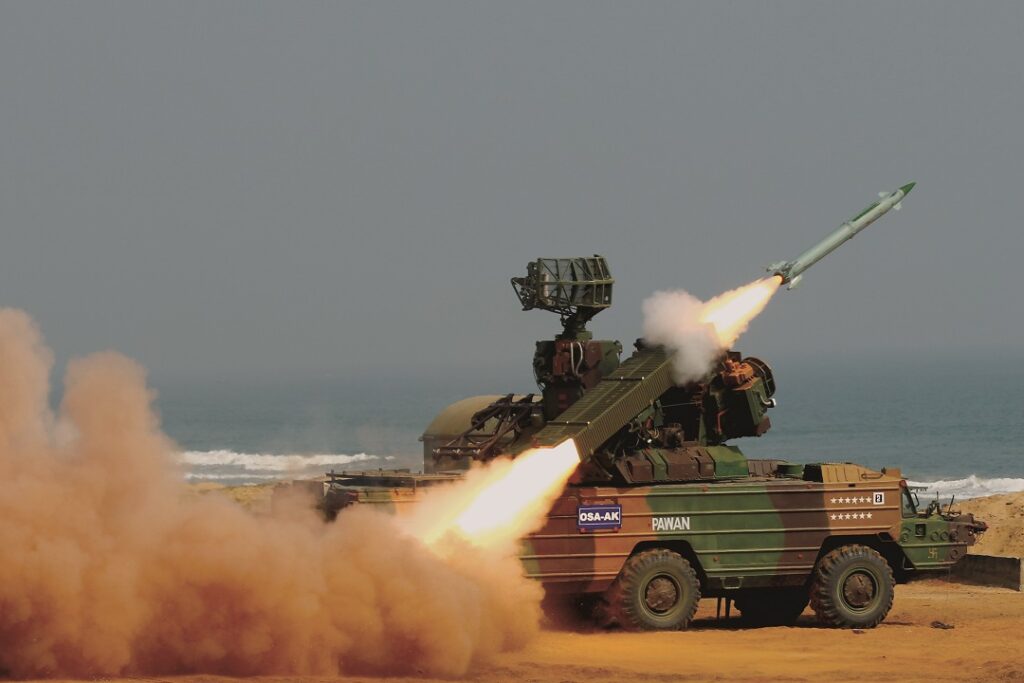
Singh hailed Operation Sindoor as a decisive victory for India, achieved through years of strategic preparation and reliance on indigenous equipment. He underscored that the operation, though brief in duration, was the culmination of long-term vision and coordination. The Minister announced the successful test of an indigenous integrated air defence weapon system on August 23, which hit three targets simultaneously, marking the first step toward realizing the Sudarshan Chakra Mission. This initiative aims to provide complete aerial protection to critical locations across India within the next decade.
He revealed that all Indian warships are now being built domestically, citing the commissioning of stealth frigates INS Himgiri and INS Udaygiri as proof of India’s naval self-reliance. Singh also announced the near-completion of preparations for a powerful indigenous aero-engine project, a domain where India had previously struggled. The project is expected to move to ground-level execution imminently.
The Minister highlighted the creation of Defence Industrial Corridors in Uttar Pradesh and Tamil Nadu, which are fostering innovation and manufacturing clusters. Defence exports have surged from under Rs 700 million in 2014 to nearly Rs 24 billion in 2025, with 25 percent contributed by the private sector. Over 3,000 items previously imported are now being produced indigenously under the Positive Indigenisation Lists, which cover more than 5,500 items.
Singh emphasized that defence is now a pillar of economic growth, not mere expenditure. Domestic defence production has crossed Rs 1.5 trillion, generating jobs and industrial momentum. He cited reforms such as simplified licensing, increased FDI limits to 74 percent, and streamlined Make in India processes as enablers of private sector participation.
He praised the iDEX scheme for empowering youth and startups to innovate in defence technology, stating that the government stands ready to support their breakthroughs. Singh reiterated that India seeks no enemies but will not compromise its interests, asserting that global pressure only strengthens the nation’s resolve.
Reflecting on the century’s instability—from terrorism to pandemics and geopolitical conflicts—Singh declared that Aatmanirbharta is India’s only sustainable path. He pointed to the corporatisation of the Ordnance Factory Board, which transformed losses of Rs 3 billion in 2019–20 into profits of over Rs 1.6 billion, as a symbol of liberation from colonial legacies.
He celebrated the induction of women into combat roles and highlighted indigenous advances in aircraft carriers, fighter jets, drones, radar, and missile systems. Singh cautioned the media to balance freedom with responsibility during conflict, noting that a single report can either boost morale or cost lives.
Concluding his address, Singh affirmed that Aatmanirbhar Bharat in defence is not a slogan but a roadmap for India’s security, sovereignty, and progress. He declared that India will not only meet its own defence needs but also become a reliable global partner, establishing itself as a decisive power in the 21st century.