
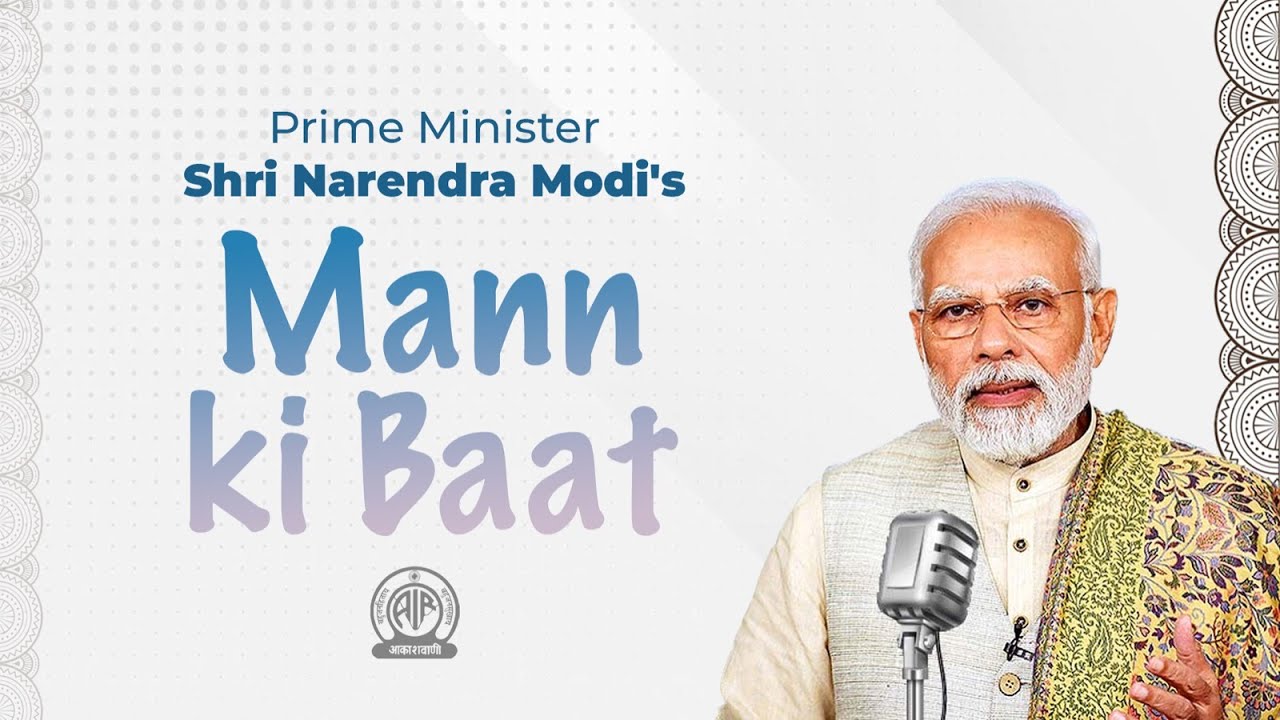
Prime Minister Narendra Modi, in the 123rd edition of his monthly Mann Ki Baat address, said the International Day of Yoga had once again witnessed widespread global participation, affirming the practice’s role as a medium of peace, empowerment and balance. He recalled that the Yoga Day journey began a decade ago and continues to become more grand with every passing year, reflecting how deeply yoga is being integrated into daily life around the world. He described scenes from across Bharat and beyond—300,000 people performing yoga together on the beach in Visakhapatnam, 2,000 tribal students doing 108 Surya Namaskars for 108 minutes, 3,000 persons with disabilities holding a yoga camp in Telangana, yoga sessions held on naval ships, snow-covered Himalayan peaks with ITBP personnel combining courage with sadhana, and Bhujangasana being performed by 2,121 people in Vadnagar to set a new record. He noted that major cities such as New York, London, Tokyo and Paris also witnessed striking images of yoga being practiced with a common expression of calm and stability. He said this year’s theme, Yoga for One Earth, One Health, was more than a slogan—it was an invocation of Vasudhaiva Kutumbakam and a nudge toward conscious, planetary living.
He extended his best wishes to all devotees undertaking religious pilgrimages and expressed admiration for the spirit of service that sustains them. He highlighted the return of the Kailash Mansarovar Yatra, calling it an auspicious restart that reconnects people with the abode of Lord Shiva—a place central to Hindu, Buddhist and Jain faiths alike. He said upcoming journeys such as the Amarnath Yatra and the recently observed Jagannath Rath Yatra are embodiments of ‘Ek Bharat Shreshtha Bharat’, demonstrating how these journeys foster mutual affection, discipline and unity. He commended those engaged in supporting pilgrims through Bhandaaras, langars, drinking water stalls, medical camps and accommodation, noting that more people participate in service than in pilgrimage itself.
The Prime Minister said two recent international recognitions had made every Indian proud. First, the World Health Organization has declared Bharat free of trachoma, a bacterial eye infection that once affected millions and could cause blindness if untreated. He credited this to the dedicated work of healthcare workers, and major public initiatives such as the Swachh Bharat Abhiyan and Jal Jeevan Mission, which addressed root causes by ensuring sanitation and access to clean drinking water. Second, he cited an International Labour Organization report that affirmed over 64 percent of Bharat’s population—approximately 950 million people—now receives at least one social protection benefit, up from less than 250 million in 2015. He called this a testament to saturation-focused governance and a strong foundation for social justice.
He played archival audio of Morarji Desai, Jagjivan Ram and Atal Bihari Vajpayee to recall the 50th anniversary of the Emergency and said the period represented an unprecedented assault on democracy, when fundamental rights were suspended, courts rendered powerless, and over 100,000 people were imprisoned. He referred to the Emergency as a time of oppression, with arbitrary arrests, student persecution, and denial of expression. He praised the people’s resilience, saying they resisted compromise and ultimately defeated those who imposed the Emergency, thereby restoring democracy and defeating dictatorship.
Turning to regional developments, he said Bodoland in Assam had emerged as a symbol of hope, unity and sporting talent. He highlighted the Bodoland CEM Cup where over 3,700 football teams and nearly 70,000 players, including a large number of girls, had participated. He hailed players such as Halicharan Narzary, Durga Boro, Apurba Narzary and Manbir Basumatari as national inspirations who turned adversity into excellence through sheer resilience. He said their journeys had given Bodoland a new identity on India’s sports map, and encouraged youth to focus on their fitness. He recalled his earlier health advice—reduce oil in cooking by 10 percent to reduce obesity—and said physical wellbeing is the first step to unlocking capability.
He celebrated the conferment of GI status to Eri Silk from Meghalaya, which he said had been nurtured over generations by tribes such as the Khasi. He described Eri Silk as Ahimsa Silk because silkworms are not harmed in the making process, making it an ethical and sustainable product that is well-suited for the global market. He urged citizens to try clothes made from Eri Silk and remain committed to khadi, handloom and Vocal for Local. He said customers and traders both must choose only Made in India goods to give new energy to Atmanirbhar Bharat.
He described the growing momentum of women-led development as India’s future, and shared success stories from across the country. In Bhadrachalam, Telangana, women who once worked as field labourers now make millet biscuits branded Bhadradri Millet Magic, which are sold in Hyderabad and even exported to London. They have also produced 40,000 low-cost sanitary pads under the Giri Sanitary Pads label for distribution in schools and offices. In Kalaburagi, Karnataka, women formed a cooperative to mass-produce jowar rotis, creating a local brand that sells over 3,000 rotis daily in Bengaluru, both at counters and on online platforms. Their income is rising steadily. In Madhya Pradesh, Suma Uike of Balaghat district began by joining a Self Help Group and training in mushroom cultivation and animal husbandry. Her efforts eventually expanded to a Didi Canteen and a Thermal Therapy Centre, turning her into a beacon of self-reliance. He said such stories, though regionally diverse, share a common glow of confidence and empowerment.
He spoke of the overwhelming reception to the holy relics of Buddha in Vietnam. Originally discovered at Nagarjunakonda in Andhra Pradesh, these relics were taken to nine locations in Vietnam where more than 15 million people paid their respects. He said the devotion, especially among the elderly, children and persons with disabilities, was so deep that the Vietnamese government requested a 12-day extension, which India granted. He said this reaffirmed that Buddha’s message unites people, and urged everyone to visit Buddhist sites in their states to connect spiritually and culturally.
On environmental efforts, he praised Pune resident Ramesh Kharmale who, along with his family, spends weekends planting trees, digging trenches and building small ponds in Junnar’s hills. Their actions are reviving ecosystems and attracting birds and wildlife. He also lauded Ahmedabad’s Mission for Million Trees, especially its ‘Sindoor Van’ dedicated to fallen soldiers of Operation Sindoor. He cited the example of Patoda village in Chhatrapati Sambhaji Nagar, which has become a carbon-neutral Gram Panchayat through solid waste management, wastewater treatment, tree planting in memory of the deceased, and use of cow dung cakes for cremation. He said this shows how collective resolve in small practices can trigger profound transformations.
He said he would speak more about India’s recent space achievement and his interaction with astronaut Group Captain Shubhanshu Shukla in the next Mann Ki Baat episode. Before signing off, he reminded listeners of the significance of July 1, which celebrates both Doctors’ Day and Chartered Accountants’ Day, acknowledging the twin pillars of health and economy. He said both professions play vital roles in enriching lives, and extended greetings to members of both communities.
He invited citizens to continue sending in suggestions and contributions to future episodes of Mann Ki Baat so that the spirit of national inspiration and dialogue remains vibrant.