

Karad, a thriving city in Maharashtra’s Satara district, has emerged as a pioneer in tackling the complex issue of sanitary waste management, setting new standards for effective and sustainable solutions in the process. Amid the growing challenges of improper waste disposal leading to environmental degradation and health risks, Karad has introduced a holistic system to ensure the safe handling, segregation, collection, and disposal of sanitary and biomedical waste. By achieving 100% segregation and processing of waste, the city has established itself as a role model for urban sanitation practices across India.
With an average of 300 to 350 kilograms of sanitary waste collected daily from various sources, including households, hospitals, and clinics, Karad has implemented a series of groundbreaking initiatives aimed at breaking taboos surrounding sanitary waste and fostering responsible disposal practices among residents. Awareness campaigns, workshops, community outreach programs, and public service announcements have been integral to educating the population about the health risks associated with improper waste disposal. These efforts have motivated citizens to adopt hygienic practices and segregate waste effectively.
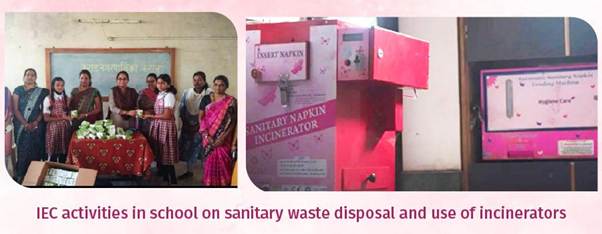
Key to the city’s success has been the active involvement of women groups formed in collaboration with the Karad Municipal Council. These groups have championed the cause of sanitary waste segregation and disposal, significantly increasing awareness and compliance among the local community. To support these efforts, the municipal council installed dedicated red bins in public toilets across the city, facilitating the proper disposal of sanitary waste such as sanitary napkins, diapers, and other hygiene products. Schools were encouraged to install vending machines for sanitary pads and disposal systems, further promoting hygienic practices. Many institutions have now installed incinerators that process sanitary waste onsite, with the residue being sent to the biomedical waste treatment facility for final disposal.
The city’s sanitation infrastructure includes specialized garbage collection vehicles equipped with separate bins for sanitary waste. Sanitation staff receive training to collect this waste separately and ensure that it undergoes proper processing. This sorted waste is transported to a state-of-the-art high-temperature incineration facility operated by the Karad Hospital Association. Designed to mitigate environmental impact, the incinerator oxidizes organic materials at temperatures as high as 1200 degrees Celsius, producing heat, gas, and ash. Advanced filtration systems capture harmful emissions, ensuring compliance with air quality standards. The facility’s real-time data monitoring is integrated with the State Pollution Control Board’s system for stringent oversight.
The partnership between the Karad Municipal Council and the Karad Hospital Association exemplifies the success of public-private collaboration in waste management. Under this agreement, the municipal council allocated land for the construction of the Common Biomedical Waste Treatment Facility (CBWTF), while the hospital association manages its operations. Capable of processing up to 600 kilograms of waste daily, the centralized incinerator is instrumental in reducing contamination and safeguarding sanitation workers.
This innovative system has had far-reaching impacts, improving public health and enhancing environmental sustainability. By eliminating the practice of open dumping, the city has curbed the spread of diseases and reduced pollution levels. The economic burden on the municipal council has also been alleviated, as the cost of waste collection and transportation remains its sole responsibility. The high-temperature incineration of sanitary waste has ensured a safer working environment for sanitation staff, further contributing to the city’s comprehensive approach to waste management.
Karad’s dedication to proper waste segregation, awareness campaigns, and infrastructural development has elevated its status as a leader in sanitary waste management. The city’s efforts have not only fostered cleanliness but have also improved the quality of life for its residents, particularly women, who benefit from better access to hygienic disposal facilities. As a model of sustainable waste management, Karad continues to inspire cities across India to adopt innovative approaches to tackle the pressing challenges of urban sanitation.