
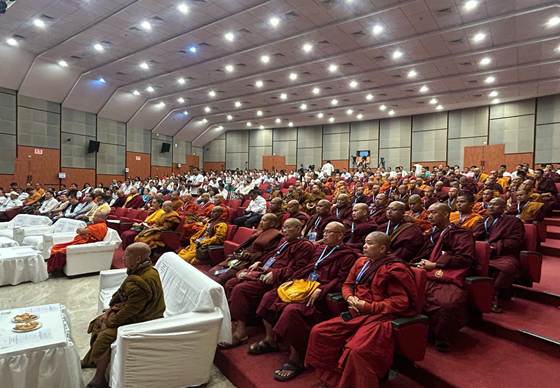
The two-day International Conclave on Buddha Dhamma and the Culture of North-East India concluded in Namsai, Arunachal Pradesh, with a strong call for recognizing the region’s rich Buddhist heritage and establishing a dedicated Buddhist tourism circuit. Organized by the International Buddhist Confederation in collaboration with the Ministry of Culture, the event saw participation from over 300 delegates, including Sangha leaders, Bhikkus, Bhikkhunis, academicians, and representatives from Bhutan, Myanmar, and Cambodia.
Namsai, a district nestled in the easternmost part of Arunachal Pradesh, was spotlighted as an ideal location for a Buddhist Circuit in the North-East. Emphasizing this, Deputy Chief Minister Chowna Mein described Namsai as a living repository of ancient Buddhist culture and traditions. He said the region continues to uphold a way of life deeply influenced by centuries-old practices and philosophies rooted in Buddha Dhamma.
Highlighting the cultural vibrancy of the state, Mein pointed to the successful celebration of the Songpa Water Festival, a major Buddhist event of the Khamti community. The festival, held in Namsai and other areas such as Changlang and Itanagar, welcomed international visitors and reflected the deep integration of socio-religious traditions in the local way of life. He said the event’s success demonstrates the potential of the region to attract global interest in spiritual and cultural tourism.
Mein noted that the Tai Khamti community, to which he belongs, played a historic role in resisting colonial rule. “We defeated the British in the Anglo-Khamti war of 1839,” he stated, recalling how the community faced retaliation through the destruction of villages and forced dispersal across the Northeast.
He also underscored the community’s contribution to linguistic heritage, explaining that they have preserved the Pali language through the Khamti script, known as Lic Tai. Alongside Bhoti, it is one of the two ancient scripts still in use in the region. The Ramayana and Mahabharata have been transcribed in this script, underlining its cultural and literary significance.
Appreciation was expressed for the Mahabodhi Society’s impactful work in the region, particularly in the fields of education and youth empowerment. Mein voiced hope that the region would soon receive a dedicated skill development centre to support the aspirations of the local youth.
MLA Zingnu Namchoom also addressed the gathering, emphasizing that in the region, “our dharma is our culture; which is our way of life.” He said Buddhism guides all aspects of life, including personal and social conduct, even within traditional marriage ceremonies. He noted that the teachings of the Buddha are deeply embedded in the people’s daily lives.
The dhamma discourse was delivered by Most Ven. Aggadhamma Bhaddanta, Chief Abbot of the Pariyatti Sasana Buddha Vihara, Namsai. Secretary General of the International Buddhist Confederation, Shartse Khensur Jangchup Choeden Rinpoche, extended a warm welcome to the attendees, while Director General Abhijit Halder provided a detailed overview of the event and offered the concluding remarks.
The seminar sessions featured discussions on the historical relevance of Buddha Dhamma in the North-East, as well as the art, culture, and heritage of Buddhist communities. A special session was devoted to examining the cultural impact of Buddhism in the region. The Consul General of Bhutan in Guwahati, Jigme Thinly Namgyal, addressed participants during the inaugural session.
On the second day, special prayers and chanting are scheduled at the Golden Pagoda in memory of the victims of the recent earthquake in Myanmar and Thailand. The event will conclude with a session on Vipassana meditation, rounding off a gathering that reaffirmed the spiritual and cultural significance of the region in the broader Buddhist world.