
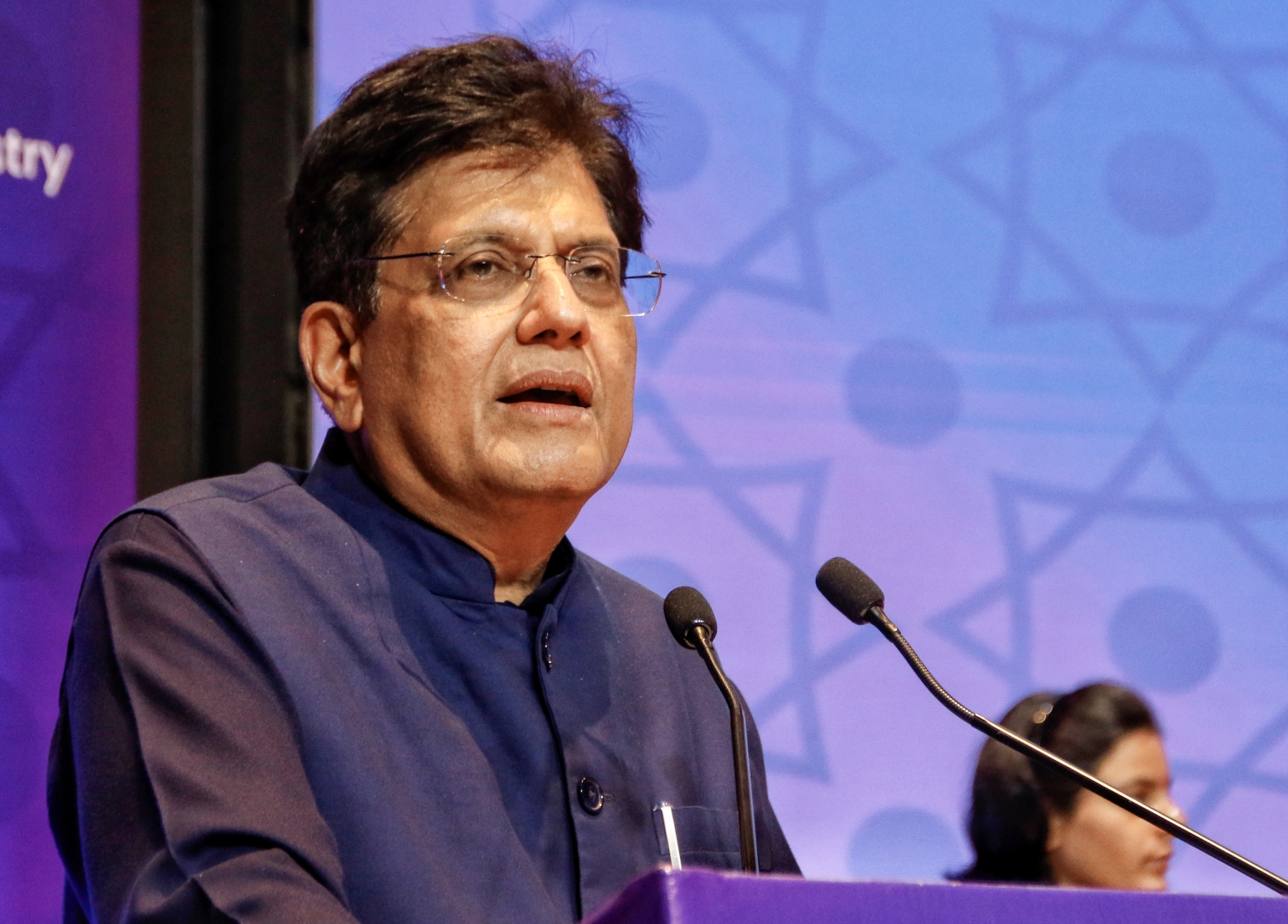
Union Commerce Minister Piyush Goyal has reiterated that India will engage in international trade agreements only when they serve the country’s strategic and economic interests. Speaking at an industry event hosted by Assocham in Mumbai, Goyal stated unequivocally that negotiations—including those with the United States—will not culminate in bilateral trade agreements unless they align with national priorities and objectives.
Responding to questions on the status of the India–US Bilateral Trade Agreement (BTA), Goyal confirmed that talks have entered their fifth round in Washington, led by Special Secretary Rajesh Agrawal of the Department of Commerce. However, he emphasized that India would proceed only if the outcome benefits its domestic economic architecture. “If it doesn’t happen, we will not do it. India always puts the country’s interest first,” he said.
Goyal outlined India’s deep domestic demand capacity, stating that many current imports could be substituted with high-quality local production. This import substitution strategy, he said, forms a cornerstone of India’s evolving trade framework, alongside an emphasis on scalable, globally competitive industries.
Addressing industry leaders and entrepreneurs at the gathering, Goyal stressed the importance of mindset reform within the micro, small and medium enterprises (MSME) sector. He advocated for collective growth between large and small enterprises, highlighting the need for collaboration rather than competition. “We need a change in goals, guidance and mindset. Big or small, companies have to grow together,” he said, urging MSMEs to focus on quality, innovation, and research.
He also invited MSMEs to proactively report non-tariff barriers that may be obstructing their growth, assuring that such inputs will be used in ongoing bilateral dialogues. “Only when you inform us, we can take up these issues during discussions and work towards resolution,” Goyal told industry stakeholders.
The minister reflected on broader macroeconomic stability and institutional reform, comparing the current financial sector with conditions under the previous United Progressive Alliance (UPA) regime. He cited poor asset quality and banking stress during the UPA’s tenure and credited the Prime Minister Narendra Modi-led government with restructuring the system transparently. “During the UPA regime, the banking sector was in shambles due to rising non-performing assets. We have restructured it in a transparent manner. Today, the banking system is strong and performing well,” he said.
Goyal’s remarks align with India’s current position on calibrated trade openness, domestic industrial resilience and strategic autonomy—key themes in the country’s economic engagement and policy posture ahead of its 2047 development milestone.