
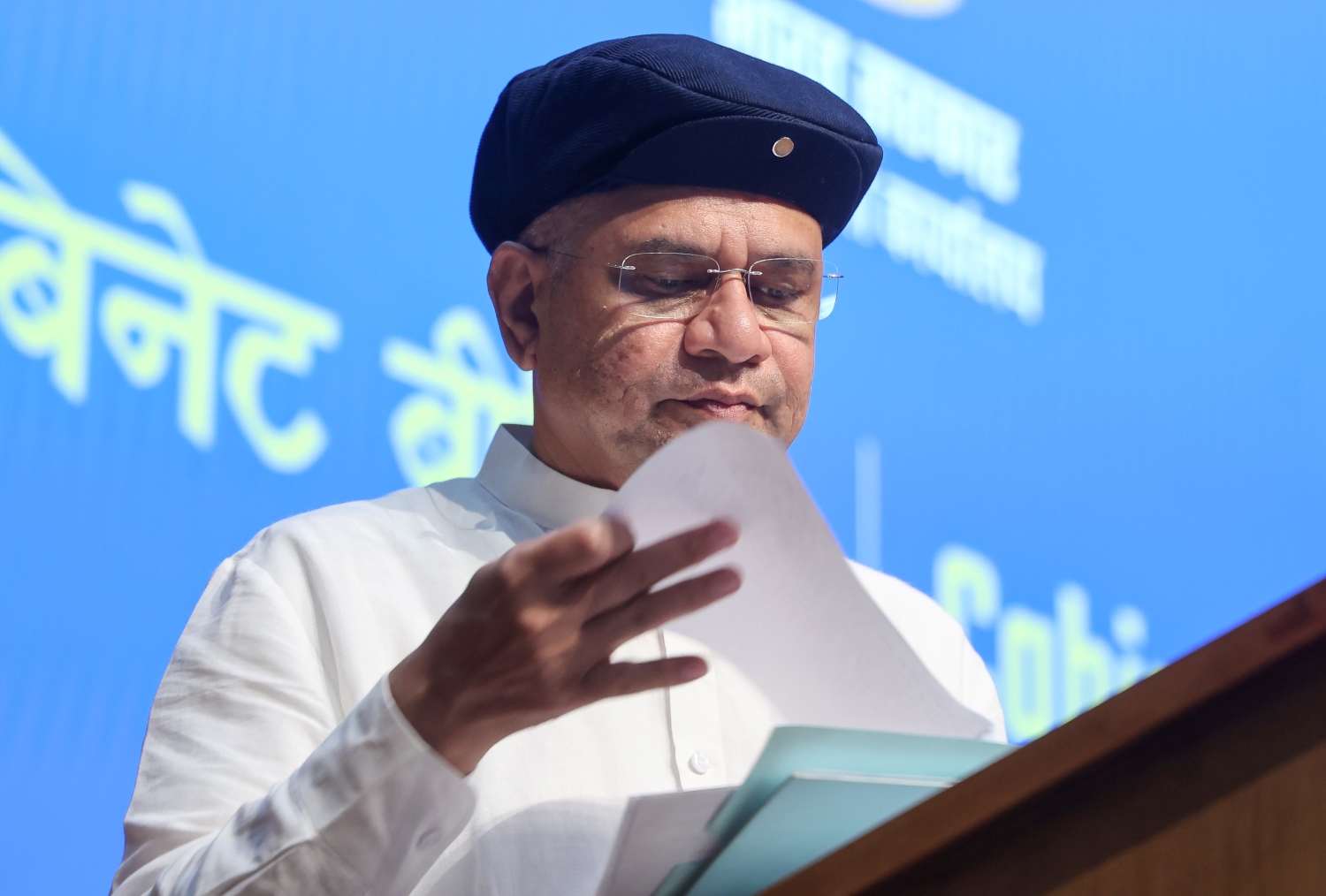
India is rapidly positioning itself as a contender among the world’s top five semiconductor-producing nations, according to Electronics and IT Minister Ashwini Vaishnaw. Speaking at the 14th convocation of IIT-Hyderabad, Vaishnaw outlined the country’s strategic trajectory—rooted in indigenous capital equipment development and ecosystem integration—for mastering the full chipmaking value chain from design to fabrication.
The minister revealed that IIT students have already designed 20 chipsets, with eight sent for fabrication at global foundries and the government-owned Semiconductor Laboratory (SCL) in Mohali. This, he said, signals a shift from dependency to design leadership, as India prepares to produce its first commercial-scale, Made-in-India chip later this year.
Vaishnaw credited the India Semiconductor Mission for catalyzing this transformation, noting that 270 colleges and 70 startups have been equipped with advanced electronic design automation tools. At IIT-Hyderabad alone, 700 students used these tools for 300,000 collective hours in just six months.
To accelerate innovation, the government has also launched AIKosh, an open-source artificial intelligence platform hosting 880 datasets and over 200 AI models, now freely accessible to students, researchers and startups. Vaishnaw emphasized that such initiatives will not only amplify research but also translate into substantial economic gains.
India’s electronics exports have already surged past $40 billion, representing an eightfold increase over the past 11 years. Electronics production has scaled six times during that period, recording double-digit compounded annual growth—performance levels that Vaishnaw likened to private-sector benchmarks.
As of July 2025, six semiconductor fabrication plants have been approved or are under active development. While Mohali’s SCL continues to operate using legacy technology, the upcoming fabs are expected to usher in next-generation capabilities essential for global competitiveness.
India’s semiconductor narrative now includes not just production milestones, but a bold recalibration of governance, academia and industrial policy—toward sovereign control of one of the world’s most strategic tech sectors.