
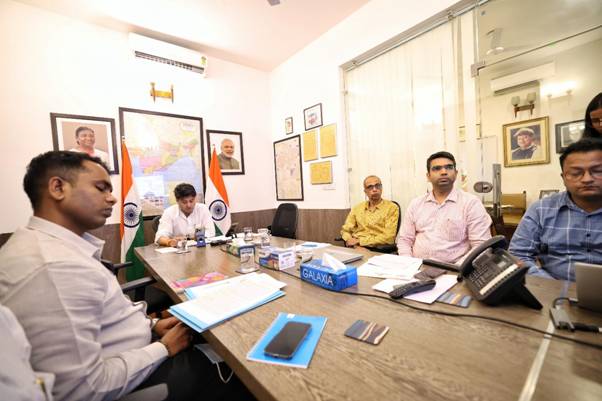
India has called for a global transformation in digital regulation, urging nations to evolve from gatekeepers into ecosystem builders. Speaking at the International Telecommunication Union’s Global Symposium for Regulators 2025 in Riyadh, Communications Minister Jyotiraditya Scindia presented India’s regulatory model as a blueprint for inclusive, innovation-driven governance.
Participating in the Executive Roundtable on “What does it take for regulators to become digital ecosystem builders?”, Scindia emphasized that regulation must shift from reactive rule-setting to proactive ecosystem design. He outlined three pillars for modern regulators: enabling public digital infrastructure, fostering innovation through regulatory sandboxes, and embedding trust via citizen-centric policies and robust data protection.
India’s digital journey was showcased as a case study in transformation. The Minister highlighted the nationwide rollout of 5G, now covering 99.9 percent of districts and connecting over 300 million users. He cited India’s highest per capita data usage globally as evidence of the country’s digital maturity. Flagship initiatives such as Aadhaar, Jan Dhan Yojana, PM-WANI, BharatNet, and India Post were described as “living arteries of empowerment,” demonstrating how regulation can seed scalable public infrastructure.
Scindia pointed to key legislative reforms including the Telecommunications Act 2023 and Telecom Cybersecurity Rules 2024, which replaced colonial-era frameworks with laws suited for the AI and quantum era. He also highlighted the Digital Bharat Nidhi, India’s universal service fund, as a model for public-private partnerships ensuring last-mile connectivity.
India’s regulatory approach to Artificial Intelligence was presented as balanced and forward-looking. The IndiaAI Mission, launched in 2024 with a budget of Rs 10,371.92 crore (USD 1.2 billion), aims to support innovation while safeguarding ethics, safety, and inclusion. Scindia stressed that India does not seek to impose restrictive rules but cannot ignore the risks of AI misuse.
Calling for global harmonization of spectrum bands, rationalization of costs, and disaster-resilient green networks, Scindia proposed the creation of a Digital Consumer Charter to ensure fairness and transparency in the digital domain.
He concluded by stating that regulation is no longer about issuing licenses or enforcing penalties, but about laying down vision, building trust, and shaping future-ready societies. “If we succeed, we will not merely connect people—we will empower them. We will not just build networks—we will build nations,” he said.
India’s participation at GSR 2025 reaffirmed its emergence as the world’s largest digital society and a thought leader in regulatory innovation, committed to shaping a secure, inclusive, and globally harmonized digital future.