
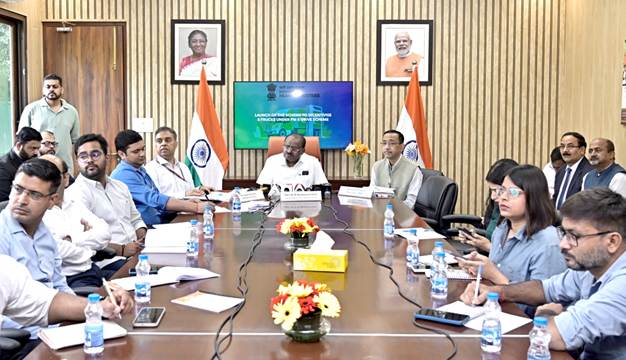
The Government of India has introduced a landmark electric truck incentive scheme under the PM E-DRIVE initiative, marking its first targeted support for e-trucks to accelerate clean and sustainable freight mobility. Union Minister for Heavy Industries and Steel H D Kumaraswamy formally launched the scheme, describing it as a decisive step toward achieving India’s net-zero emissions goal by 2070 and fulfilling the vision of Viksit Bharat by 2047.
Electric trucks in the N2 and N3 categories, defined under Central Motor Vehicle Rules, will qualify for direct incentives. N2 includes trucks with gross vehicle weight (GVW) above 3.5 tonnes and up to 12 tonnes, while N3 covers trucks exceeding 12 tonnes and up to 55 tonnes. For articulated vehicles, the scheme applies only to the N3-category puller tractors.
The maximum incentive per truck is set at Rs 960,000, provided as an upfront discount and reimbursed to OEMs via the PM E-DRIVE portal on a first-come, first-served basis. This support is expected to facilitate deployment of approximately 5,600 e-trucks nationwide. A special provision for 1,100 e-trucks registered in Delhi is backed by an outlay of Rs 1 billion, targeting the capital’s critical air quality concerns.
To ensure reliability and sustainability, the scheme mandates manufacturer-backed warranties. Battery warranties must span five years or 500,000 kilometres, whichever is earlier, while vehicle and motor warranties must cover five years or 250,000 kilometres. Eligibility also requires mandatory scrapping of older polluting trucks, ensuring dual impact—fleet modernisation and emission reduction.
The initiative aligns closely with key transport sectors including cement, steel, ports and logistics, where the environmental impact of diesel freight vehicles remains significant. Although diesel trucks represent just 3 percent of India’s total vehicle population, they contribute 42 percent of all transport-related greenhouse gas emissions.
Leading OEMs such as Volvo Eicher, Tata Motors and Ashok Leyland are already engaged in manufacturing e-trucks domestically, reinforcing the Atmanirbhar Bharat objective. The scheme is expected to lower logistics costs while reducing urban and industrial pollution.
Central Public Sector Enterprises have pledged active participation. The Steel Authority of India Limited will procure 150 e-trucks over two years and ensure that at least 15 percent of hired vehicles across its units are electric.
The Ministry of Heavy Industries reaffirmed that the scheme represents a forward-looking strategy to drive clean energy adoption in heavy vehicles and establish a self-reliant electric mobility ecosystem. By integrating economic viability with environmental responsibility, the e-truck incentive scheme positions India as a frontrunner in global green freight transitions.