
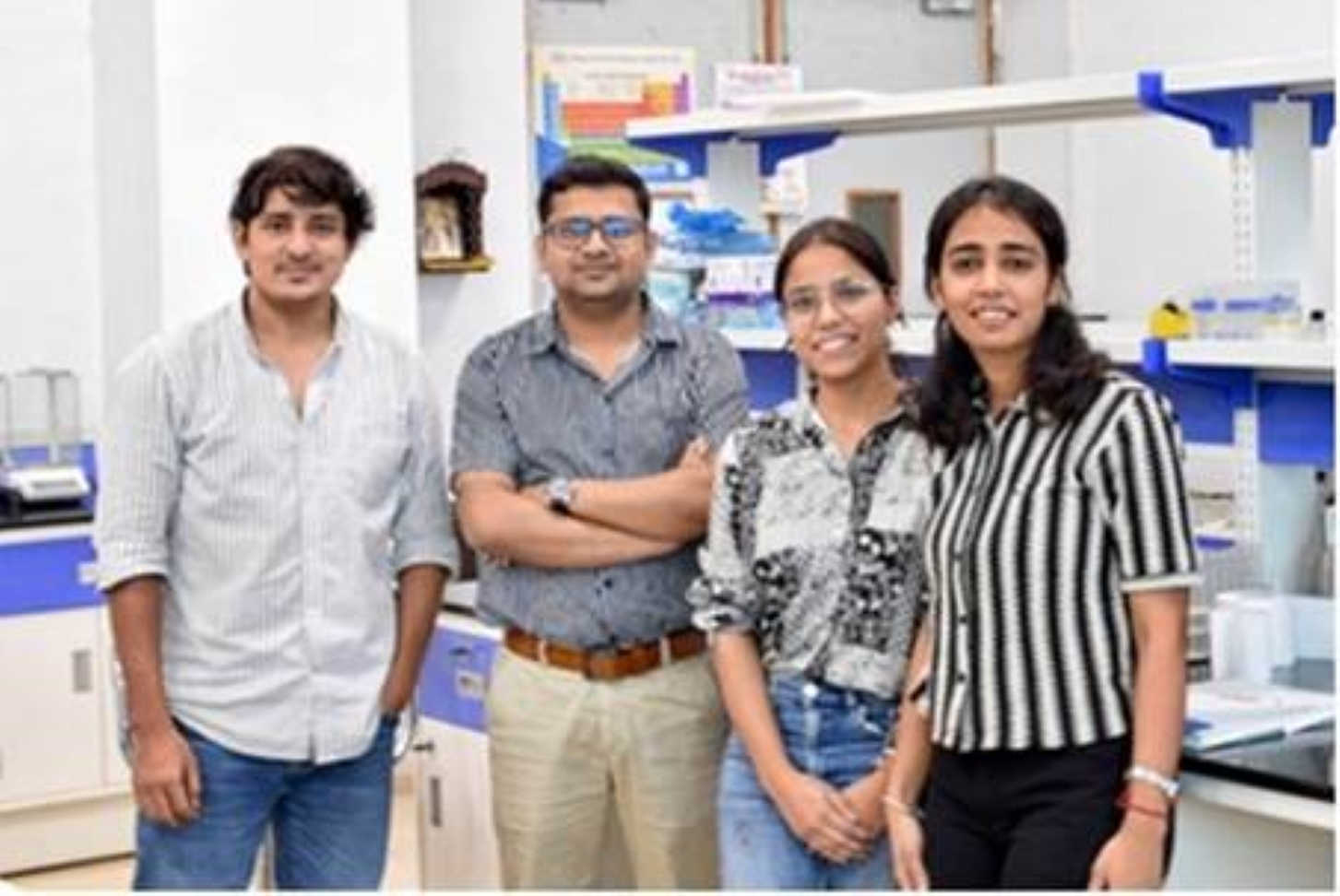
Scientists from the Institute of Nano Science and Technology (INST), Mohali, have demonstrated that cholesterol, a substance commonly associated with heart disease, can be used to control the spin of electrons for the development of energy-efficient spintronic devices. Cholesterol serves as an ideal platform for constructing these supramolecular-based materials due to its intrinsic handedness and flexibility, which allows for precise control over molecular properties.
The team, led by Dr. Amit Kumar Mondal, introduced cholesterol-based nanomaterials as new platforms for future quantum technologies and spintronic applications. These materials have the capability to manipulate the spin of electrons, a quantum feature that is crucial for the next generation of electronics. By combining metal ions with an organic framework, the researchers showed how a material can separate electrons based on their magnetic spin orientation by adjusting the kind and concentration of the metal ions.
Through the combination of cholesterol and different metal ions, the scientists created nanomaterials that selectively filter electron spins. They found that both spin directions could be controlled within a single system. A simple chemical tweak or an achiral chemical stimulus can tune the flow of spin information. This chemical tunability provides an elegant and powerful technique for manipulating spin with high precision, representing a significant advancement in the development of biomaterials for advanced quantum and spin technologies. The findings from this research have recently been published in the journal Chemistry of Materials. This breakthrough could lead to the creation of energy-efficient memory chips for “greener technology” and bioelectronic devices that are capable of separating molecules with extreme precision.