

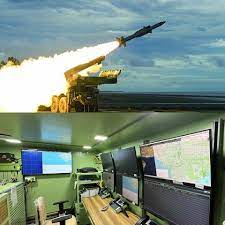
In its first-ever battle deployment during Operation Sindoor, India’s Akashteer air defense system intercepted and destroyed every incoming aerial threat launched by Pakistan, proving its combat readiness, technological superiority, and effectiveness beyond global counterparts like Iron Dome, Patriot, and S-400.
Pakistan launched an unprecedented aerial assault, deploying high-speed kamikaze drones, loitering munitions, and cruise missiles, but Akashteer intercepted and neutralized 100% of these threats within seconds of detection. The system demonstrated unmatched precision, leveraging AI-driven automation and real-time satellite guidance from NAVIC, ensuring zero damage to Indian military or civilian infrastructure.
Akashteer’s Performance in Operation Sindoor
- First combat use: Deployed for the first time, immediately proving its effectiveness in real battlefield conditions.
- 100% interception success: Tracked and destroyed every drone, missile, and loitering munition fired from across the border.
- NAVIC-powered precision: Unlike GPS-dependent foreign systems, NAVIC ensured real-time, high-accuracy target tracking and instant response, preventing any enemy penetration of Indian airspace.
- Full automation: Operates without manual intervention, drastically reducing response time to threats.
Superiority Over Other Air Defense Systems
Vs. Iron Dome (Israel): While Iron Dome specializes in short-range interception of rockets, Akashteer operates at multiple altitude layers, handling high-speed drones, loitering munitions, and cruise missiles with seamless integration into India’s tri-service command networks (IAF’s IACCS and Navy’s TRIGUN).
Vs. Patriot (USA): Patriot’s static radar dependency limits real-time response, whereas Akashteer is fully mobile, allowing it to be deployed anywhere, track targets dynamically, and respond faster than Patriot’s pre-positioned missile batteries.
Vs. S-400 (Russia): The S-400 specializes in long-range engagement, but Akashteer complements it with short and mid-range automated interception, ensuring India has complete multi-layer air defense coverage.
Vs. HQ-9 (China/Pakistan): Pakistan’s HQ-9 systems failed to detect and neutralize India’s retaliatory strikes, proving inferior to Akashteer’s networked warfare capabilities that ensured complete battlefield awareness and instant strike precision.
Global Impact and Future Prospects
The success of Akashteer has attracted international attention, with multiple countries expressing interest in procuring the system, recognizing its combat-proven efficiency. Defence Research and Development Organisation (DRDO) chief Samir V. Kamat confirmed that Akashteer’s performance in Operation Sindoor exceeded all expectations, placing India at the forefront of next-generation air defense warfare.
Akashteer’s battle debut has redefined India’s defense capabilities, proving that domestic air defense systems surpass foreign imports in effectiveness, automation, and integration. With NAVIC-backed precision, AI-driven automation, and unmatched operational mobility, India now stands as a global leader in cutting-edge air defense technology.
This is India’s definitive moment of military technological dominance, and Akashteer’s first combat deployment has cemented its place as the world’s premier air defense solution.