

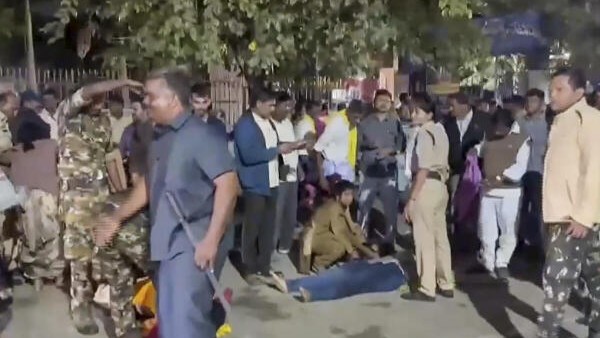
India’s spiritual and cultural landscape is a mosaic of mass gatherings—temples that draw millions, festivals that swell into human oceans, and public events that blur the line between devotion and danger. Yet, with alarming frequency, these gatherings descend into chaos. Stampedes, suffocations, and structural collapses have become grimly familiar headlines. The pattern is unmistakable, the consequences devastating, and the response—perennially reactive. It is time for the Indian government, both at the Centre and in the states, to abandon ad hocism and legislate a strict, enforceable quota system for entries to religious shrines, public events, and mass congregations. Anything less is a dereliction of duty.
The argument is not abstract. The country’s recent history is littered with tragedies that could have been averted with basic crowd control. The 2022 Vaishno Devi stampede, which killed a dozen pilgrims, was not an anomaly—it was a continuation of a deadly trend. From the 2008 Naina Devi temple disaster to the 2013 Ratangarh stampede and the 2015 Deoghar tragedy, the toll is staggering. Each time, the post-mortem is the same: overcrowding, poor planning, lack of coordination, and an absence of enforceable limits. And each time, the lessons are forgotten.
India’s places of worship and public venues were never designed to accommodate the scale of modern footfall. Narrow staircases, single-entry corridors, and open grounds without defined egress routes are common. Add to this the surge of unregulated foot traffic—often spurred by religious fervor, political mobilization, or seasonal rituals—and the result is a volatile mix. The absence of quotas is not just a logistical oversight; it is a structural failure that endangers lives.
Technology offers no excuse. In an era where even small-town temples have digital donation portals and QR-coded prasad coupons, implementing a real-time entry quota system is entirely feasible. Online booking platforms, SMS-based confirmations, and biometric verification can ensure that only a safe number of people enter a venue at any given time. The Tirumala Tirupati Devasthanams has already demonstrated the viability of such systems. What is lacking is the political will to make them mandatory across the board.
But quotas alone are not enough. Enforcement must be ruthless. Violators—whether they are overzealous organizers, indifferent administrators, or individuals who breach limits—must face severe penalties. Fines, event cancellations, and even criminal prosecution should be on the table. The message must be unambiguous: public safety is non-negotiable. In a country where rules are often seen as suggestions, deterrence is essential.
Critics will argue that such measures infringe on religious freedom or cultural spontaneity. But freedom does not mean anarchy. The right to worship or assemble must be balanced against the right to life and safety. A quota system does not deny access; it regulates it. It ensures that every devotee, every citizen, has a fair and safe opportunity to participate. It also dismantles the VIP culture that allows the privileged to bypass queues while the masses jostle and suffocate.
The digital divide is a valid concern. Not every pilgrim has a smartphone or internet access. But this can be addressed through hybrid systems—online for the tech-savvy, and offline counters for others, supported by local bodies and volunteers. What matters is not the mode of access, but the enforcement of limits.
Globally, India is not alone in facing this challenge. Saudi Arabia’s Hajj pilgrimage, which draws millions annually, operates under a strict international quota system. Biometric tracking, scheduled movements, and real-time surveillance have significantly reduced the frequency of stampedes. Japan’s Gion Matsuri and Brazil’s Carnival deploy layered crowd control protocols, including ticketing, zoning, and emergency drills. India, with its digital infrastructure and administrative depth, can do better.
The responsibility lies squarely with the state governments. While the Centre can issue guidelines, it is the states that must audit venues, define capacity thresholds, and deploy enforcement mechanisms. Maharashtra, Tamil Nadu, Uttar Pradesh, and Andhra Pradesh—states that host some of the largest religious and cultural gatherings—must lead by example. The tragic 2024 stampede at a temple festival in Maharashtra, which claimed over 30 lives, should have been a turning point. Instead, it became another entry in a growing list of preventable disasters.
This is not a call for bureaucratic overreach. It is a demand for governance. The sanctity of a shrine or the spirit of a festival is not diminished by order—it is preserved by it. The chaos of unregulated crowds is not a sign of devotion; it is a failure of administration. And when that failure costs lives, it becomes a moral crisis.
India must act. Not with tokenism or temporary barricades, but with a national policy that mandates quotas, enforces penalties, and prioritizes safety over sentiment. The next stampede is not a question of if, but when. The only question is whether we will have the courage to prevent it.