

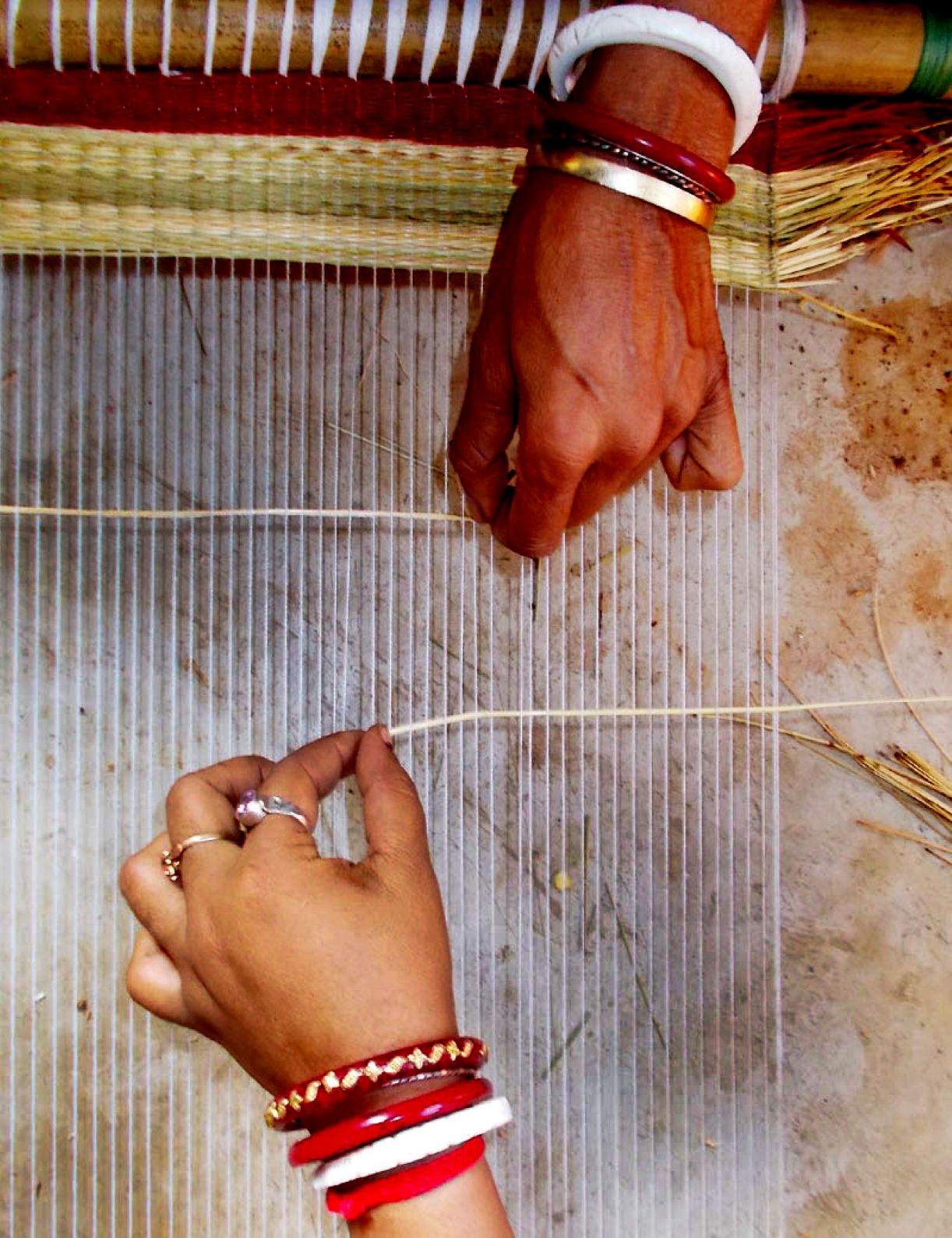
Madurkathi, the traditional art of mat weaving from West Bengal, India, is a centuries-old craft that blends utility, sustainability, and cultural heritage. Rooted in the agrarian and artisanal life of rural Bengal, this craft is centered around the use of madurkathi—a type of reed belonging to the Cyperaceae family. The mats, known locally as madur, are woven primarily in the Medinipur district and have become emblematic of Bengal’s indigenous craftsmanship.
The word madur is a generic Bengali term for floor mats, but madurkathi specifically refers to mats woven from the madur kottir reed. These mats are prized for their non-conductive and sweat-absorbing properties, making them ideal for use in Bengal’s hot and humid climate. Traditionally, they have served as seating, bedding, and ritual accessories in households across the region.
Historically, Madurkathi weaving finds mention in ancient Indian texts such as the Mahabharata and the Vedas, indicating its longstanding presence in the subcontinent’s cultural fabric. The craft gained prominence during the Mughal period, especially with the introduction of Masland mats—an elite variant known for its fine quality and intricate patterns. These mats were often commissioned for royal and aristocratic use. During the British colonial era, Madurkathi production expanded significantly, with records noting its widespread manufacture and trade.
The craft is predominantly practiced by women of the Mahishya caste, forming a vital part of the cottage industry in rural Bengal. It contributes significantly to household incomes and empowers women through skill-based employment. The weaving process is labor-intensive and requires dexterity, patience, and an intimate understanding of the reed’s texture and behavior.
Madurkathi mats are made using three primary techniques: ekruti, dokruti, and masland. The ekruti mats are single-layered and simpler in design, while dokruti mats are double-layered, offering greater durability. The masland mats are the most refined, featuring elaborate motifs and symmetrical patterns. These are often dyed using natural colors derived from local plants and minerals, preserving the eco-friendly ethos of the craft.
The raw material—madurkathi reed—is cultivated in marshy lands and wetlands, particularly in the Paschim and Purba Medinipur districts. The reed is harvested, dried, and split into fine strips before being woven on a simple bamboo frame. The weaving is done manually, with artisans using their hands and feet to interlace the strips into geometric and floral designs. The process can take several days depending on the complexity of the pattern and the size of the mat.
Madurkathi mats are not only utilitarian but also hold cultural significance. They are used in religious ceremonies, especially in rural households where mats are laid out for rituals and prayers. It is customary to offer guests freshly rolled Madurkathi mats as a gesture of hospitality. Their presence in both urban and rural homes underscores their enduring appeal and versatility.
In recognition of its cultural and economic importance, Madurkathi was granted Geographical Indication (GI) status on March 28, 2018. This designation helps protect the craft from imitation and ensures that only mats produced in the designated region using traditional methods can be marketed under the name Madurkathi. The GI tag has also opened up new avenues for export and global appreciation.
Despite its heritage status, the craft faces challenges. The availability of raw materials is subject to environmental fluctuations, and younger generations are increasingly moving away from artisanal professions. Efforts are underway to revitalize the sector through government schemes, NGO support, and design interventions that blend traditional techniques with contemporary aesthetics.
Organizations such as the West Bengal Khadi and Village Industries Board have initiated training programs and market linkages to support artisans. Designers and craft activists are also collaborating with weavers to create diversified products such as table runners, wall hangings, and fashion accessories, thereby expanding the market for Madurkathi beyond mats.
Madurkathi’s appeal lies in its simplicity, sustainability, and cultural depth. It exemplifies how traditional crafts can adapt to modern sensibilities while retaining their core identity. As global interest in eco-friendly and handmade products grows, Madurkathi stands poised to reclaim its place as a symbol of Bengal’s artisanal excellence.