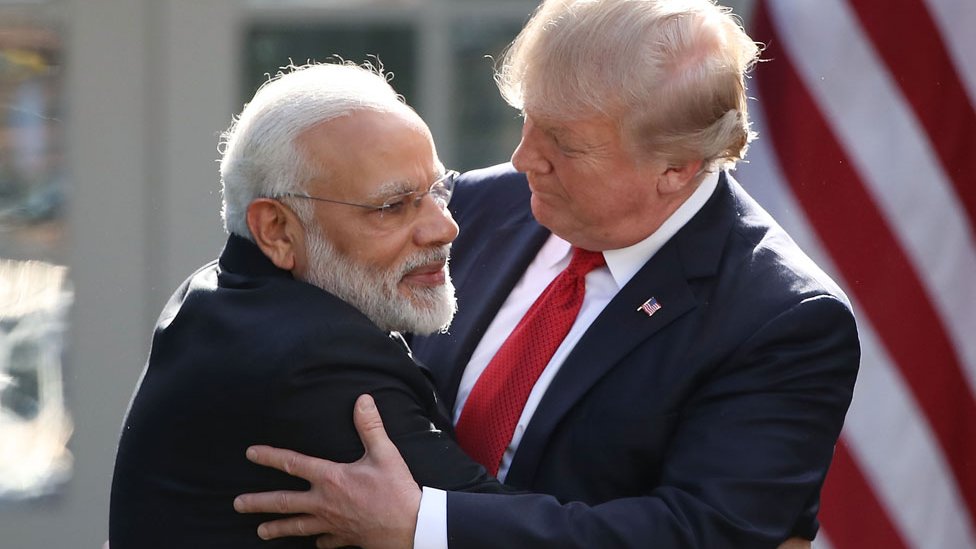

Recent actions and statements from former U.S. President Donald Trump have stirred unease in India’s strategic and economic calculations. Central among them are his assertive claims about India’s energy policy, aggressive tariff posture, and what many view as a transactional approach to what had been evolving into a more balanced strategic partnership. For Indian policymakers and business leaders alike, these developments present real risks — but also openings for recalibration of the bilateral relationship.
What’s happening and why India worries
One flashpoint has been Trump’s public claim that India agreed to drastically cut imports of Russian crude oil by year-end — assertions that New Delhi has neither confirmed nor welcomed. From India’s perspective, energy security is a matter of national policy rather than bilateral caprice, and any suggestion that it has made commitments under external pressure can create domestic backlash and strategic discomfort.
Then there’s the trade front: India is facing steep tariffs from the U.S. (under Trump’s administration) labeled as “reciprocal” or penalty tariffs linked to oil imports and other issues. Such unilateral escalation can cut into Indian exports, provoke reciprocal actions, impair investor confidence and strain strategic goodwill.
Beyond economics, analysts have noted a deeper shift—one in which India perceives the U.S. approach (under Trump) as increasingly transactional, asking “What are you doing for us?” rather than acknowledging India’s contributions toward shared regional goals. For a country seeking strategic autonomy and partnerships on its own terms, this tone is unwelcome.
The implications
For India, the risks are many. One, India’s dependence on imported energy, especially from Russia (at discounted rates), means that pressure to cut those volumes could increase costs and tighten margins for refiners and consumers. Two, rising trade tension clouds bilateral optimism and may slow investment from U.S. companies considering India as a manufacturing base. Three, strategic uncertainty creeps in when alliances appear less stable and more opportunistic.
At the same time, there is broader reputational cost: if India appears to bend to U.S. demands, it may invite criticism at home for compromising sovereignty; if it resists, it may invite further trade or diplomatic retaliation. The path is narrow and narrow indeed.
So what could be the solution?
A constructive way forward involves several elements:
1. Re-establish predictable trade frameworks. Both countries should aim to negotiate agreements or interim understandings to reduce tariff uncertainty. India could propose a roadmap for energy diversification that respects its own security logic while offering the U.S. assurances on import transparency.
2. Decouple strategic partnership from transactional rhetoric. India’s value to the U.S. isn’t only about buying more U.S. oil or choosing sides in a great-power contest—it’s also about regional stability, manufacturing scale, and technological partnerships. The U.S. would benefit from acknowledging that amplitude and treating India as a strategic peer, not just a market.
3. Energy policy alignment with flexibility. India should formulate publicly its energy import plan that balances Russian oil, Middle-Eastern supplies and U.S. offers. Concurrently, it should press for stable, long-term contracts with U.S. suppliers to make any transition manageable. The U.S., in turn, should avoid pressuring Indian choices overtly and instead offer incentives (investment, technology transfer) as carrots rather than wield sanctions as sticks.
4. Strategic dialogue refresh. A high-level strategic communication channel (say an annual “U.S.-India Partnership Summit”) might help both sides align expectations, correct misperceptions and reaffirm the long-term nature of their ties irrespective of bilateral noise. This could help reduce surprises and tone down rhetorical excesses.
Conclusion
In short: India’s wariness about Trump’s latest posture is entirely understandable. The mix of public claims, tariff pressure and strategic oversimplification threatens India’s core priorities of autonomy, growth and energy security. A solution lies not in confrontation but in resetting the relationship: moving from reactive cost-management toward proactive partnership; from pressure to mutual incentive; from transactional sound-bites to strategic substance. For a billion-plus-strong democracy with global ambition, that reset is not just desirable—it’s essential.