

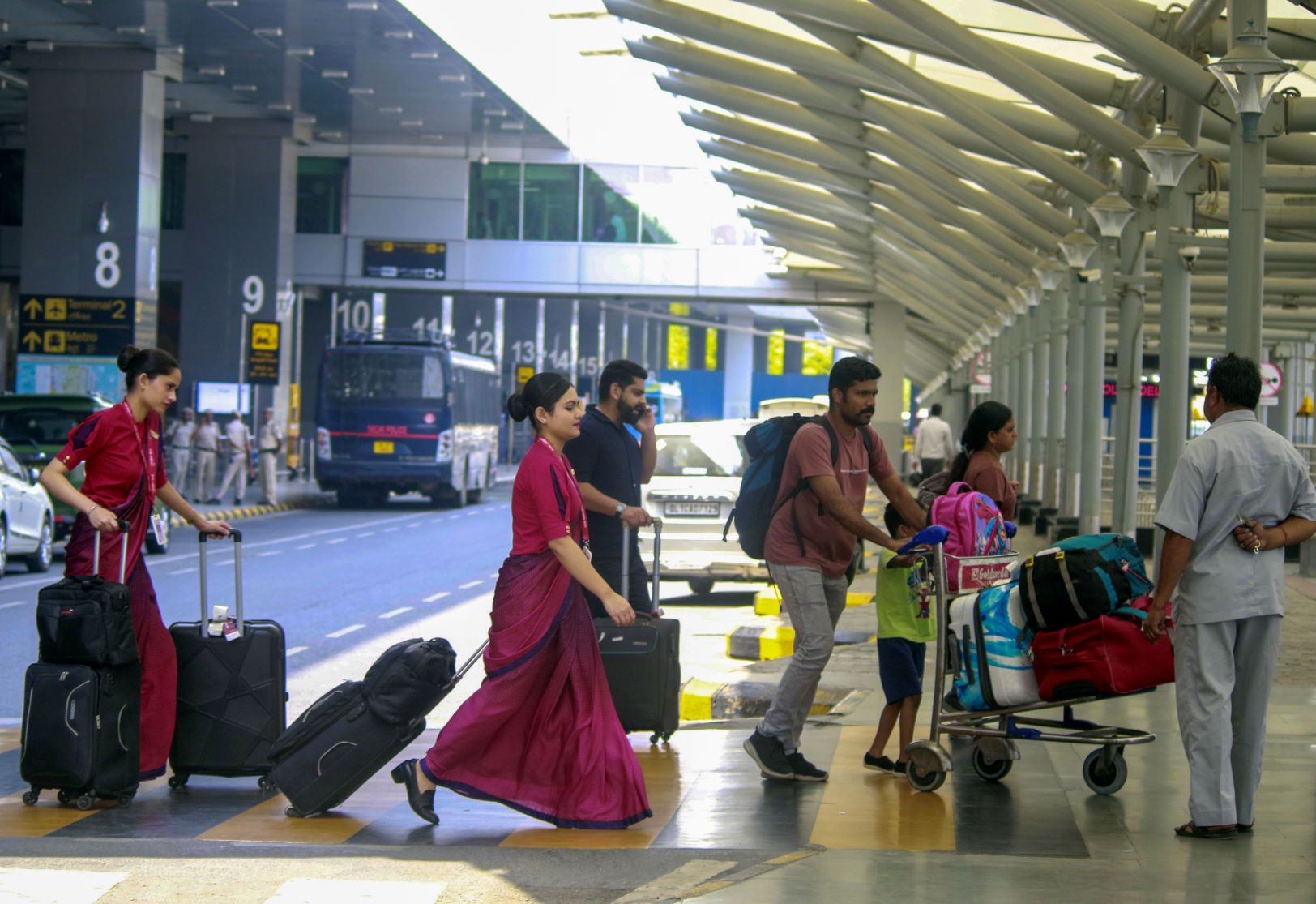
Delhi’s Indira Gandhi International Airport has entered the elite global club of airports capable of handling over 100 million passengers annually, reaching a capacity of 109 million after the full operationalisation of Terminal 1 in May 2023. It closed 2024 with this expanded capacity, becoming only the second airport in Asia after Tokyo Haneda to achieve this milestone. The airport is operated by Delhi International Airport Limited.
Plans are under consideration to further expand capacity through the rebuilding and modernisation of Terminal 2. The achievement reflects broader transformation in India’s aviation sector over the past 11 years, driven by integrated national initiatives such as PM GatiShakti, the National Logistics Policy, Bharatmala, Sagarmala, and UDAN.
India now operates 162 airports, including heliports and water aerodromes, up from 74 in 2014. In 2024–2025, Indian airports handled 412 million passengers, comprising 335 million domestic and 77 million international travellers, marking a 9 per cent increase over the previous year.
The Regional Connectivity Scheme–Ude Desh ka Aam Nagrik (RCS-UDAN), launched in 2016, has operationalised 637 routes, including 15 heliports and two water aerodromes, connecting 92 underserved and unserved airports. These budget flights have carried over 15.1 million passengers.
At the Northern Region Ministers’ Conference last month, Civil Aviation Minister Ram Mohan Naidu highlighted that India has added 88 new airports in the past decade, averaging one new airport every 40 days and 60 additional flights every hour. He stated that flying has become more available, accessible, and affordable, and reaffirmed the ministry’s commitment to inclusive aviation growth through cooperative, state-specific strategies. He credited Prime Minister Narendra Modi’s leadership for making Indian skies more connected, competitive, and collaborative.