

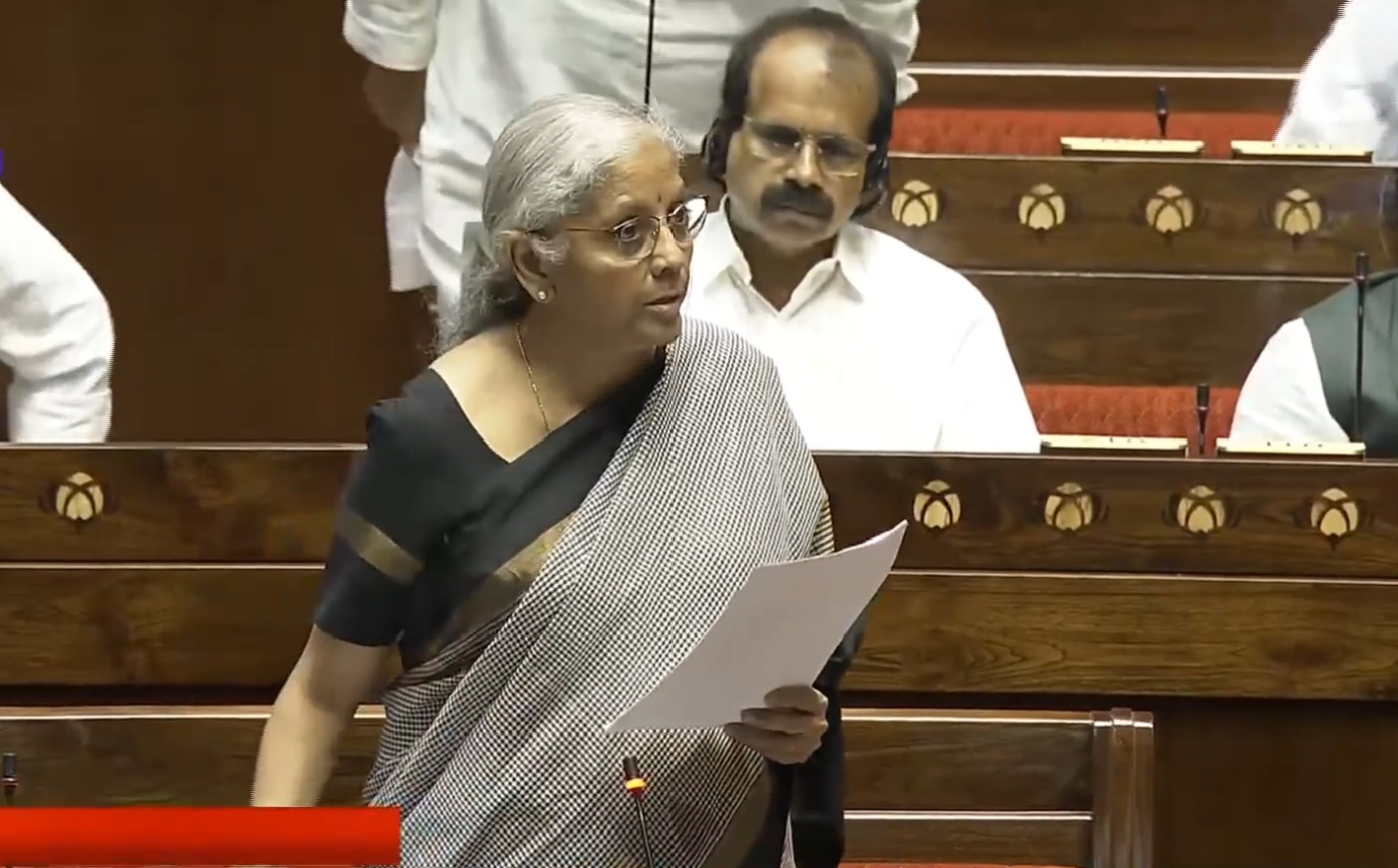
Parliament has approved the Income Tax (No 2) Bill, 2025, along with the Taxation Laws (Amendment) Bill, marking a historic overhaul of India’s tax legislation. The Rajya Sabha returned the revised bills to the Lok Sabha with a voice vote, completing the legislative process. The new law will now be sent to the President for assent, officially replacing the six-decade-old Income Tax Act of 1961.
Finance Minister Nirmala Sitharaman stated that the previous Act’s dense and inconsistent language led to widespread litigation and interpretational disputes. She emphasized that the complexity stemmed not from tax rates but from the verbose and layered drafting styles accumulated over decades. The revised Bill incorporates 285 recommendations from the Parliamentary Select Committee and aims to simplify the law, improve clarity, and align provisions with current economic realities.
The updated legislation introduces structural changes in tax slabs and rates, offering substantial relief to middle-class taxpayers. The government expects the new framework to enhance household consumption, savings, and investment. Sitharaman noted that the revisions include corrections in drafting, phrase alignment, and cross-referencing to ensure legislative precision.
BJP MP Baijayant Panda, who chaired the Select Committee, said the new law simplifies India’s tax code by nearly 50 percent, reducing the word count and eliminating ambiguity. He highlighted that the previous Act had over 5 lakh words and more than 4,000 amendments, making it inaccessible to ordinary taxpayers and MSMEs. The streamlined version is expected to reduce litigation and improve compliance.
Panda credited Prime Minister Narendra Modi’s leadership for repealing and overhauling more than 1,500 outdated laws, contributing to India’s rise as the world’s fourth-largest economy. He described the new Income Tax Act as a growth catalyst that makes taxation easier to understand and implement.
The Bill, originally introduced in February 2025, was formally withdrawn last week to incorporate committee suggestions and avoid confusion. With Parliament’s approval, the new law is set to reshape India’s tax landscape, offering a more transparent and taxpayer-friendly regime.