



By Pallavi Singh Parmar
Journalist with a Master’s in Gender and Development Studi
Even as the world has made strides in tech-driven health solutions and medical care, breastfeeding remains the simplest and natural way to nurture babies since it is extremely important for their brain development and overall growth.
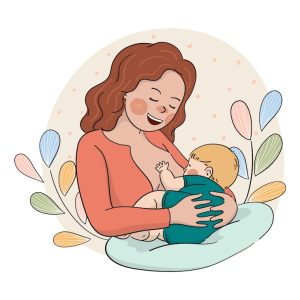
The theme for World Breastfeeding Week 2025 is “Prioritise Breastfeeding: Create Sustainable Support Systems”.
No medical advancement or formula milk can truly replicate the protective and nutritional benefits of breast milk.
Breast milk offers a unique combination of antibodies, enzymes, and hormones that strengthen a newborn’s immune system and support cognitive development—elements that formula feeding simply cannot provide.
At the same time, it’s important to highlight that not all mothers are able to breastfeed exclusively due to medical reasons. Therefore, instead of criticising formula feeding, the priority should be to create an environment where every woman is equipped with the information and support she needs. Access to skilled lactation counselling, maternity protection, and community awareness can empower more women to continue breastfeeding and rely on formula milk only when truly needed, not as a substitute forced by social or structural barriers.
According to the World Health Organisation (WHO), exclusive breastfeeding for the first six months can prevent over 800,000 child deaths annually. Initiating breastfeeding within the first hour of birth, known as the “golden hour”, significantly increases a baby’s survival chances by delivering vital nutrients and antibodies.
Breast milk is not just food, it’s the ideal food and the first vaccine for infants. It is safe, clean and contains antibodies which help protect against many common childhood illnesses.
Breast milk provides all the energy and nutrients that as infant needs during the first months of life. It continues to provide up to half or more of a child’s nutritional needs during the second half of the first year and up to one-third during the second year. Breastfed children perform better on intelligence tests, are less likely to be overweight or obese and less prone to diabetes later in life.
Women who breastfeed also have a reduced risk of breast and ovarian cancers and even postpartum depression.
Yet despite these benefits, breastfeeding remains surrounded by silence, misinformation, and a lack of proper support.
As per the National Family Health Survey (NFHS-5), only 63.7% of infants in India are exclusively breastfed for the first six months, a number that falls significantly short of global health targets.
To help guide best practices for infant feeding, WHO and UNICEF recommended the early initiation of breastfeeding within 1 hour of birth, exclusive breastfeeding for the first 6 months of life, and the introduction of nutritionally adequate and safe complementary (solid) foods at 6 months, together with continued breastfeeding up to 2 years of age or beyond.
India also launched a multi-pronged approach to enhance maternal and child nutrition. The initiatives like Mission Saksham Anganwadi and Mission POSHAN 2.0 aim to combat malnutrition through a network of over 14 lakh Anganwadi Centres and 13 lakh Anganwadi workers, reaching more than 10 crore beneficiaries with essential nutrition services. The MAA (Mothers’ Absolute Affection) program promotes early initiation and exclusive breastfeeding through public awareness campaigns and counselling services at Anganwadi centres. The Pradhan Mantri Matru Vandana Yojana (PMMVY) supports pregnant and lactating women with conditional cash incentives to offset wage loss and encourage better health-seeking behaviours.
However, the issue is not just about awareness. Breastfeeding should not be a matter of privilege or secrecy. It is a fundamental right of every mother and every child and a public health priority that requires collective responsibility. While science and policy continue to advance, the simplest, most natural act of nourishing a child still faces complex barriers. Therefore, empowering mothers with accurate information, supportive systems, and the dignity to breastfeed without fear or shame is not just a health goal, it’s a societal duty.
As a society, we must shift the lens from blaming women for choosing formula feeding to building an environment where breastfeeding is not only possible, but truly supported, respected, and normalised.
The author is a Journalist with a Master’s in Gender and Development Studies.
