



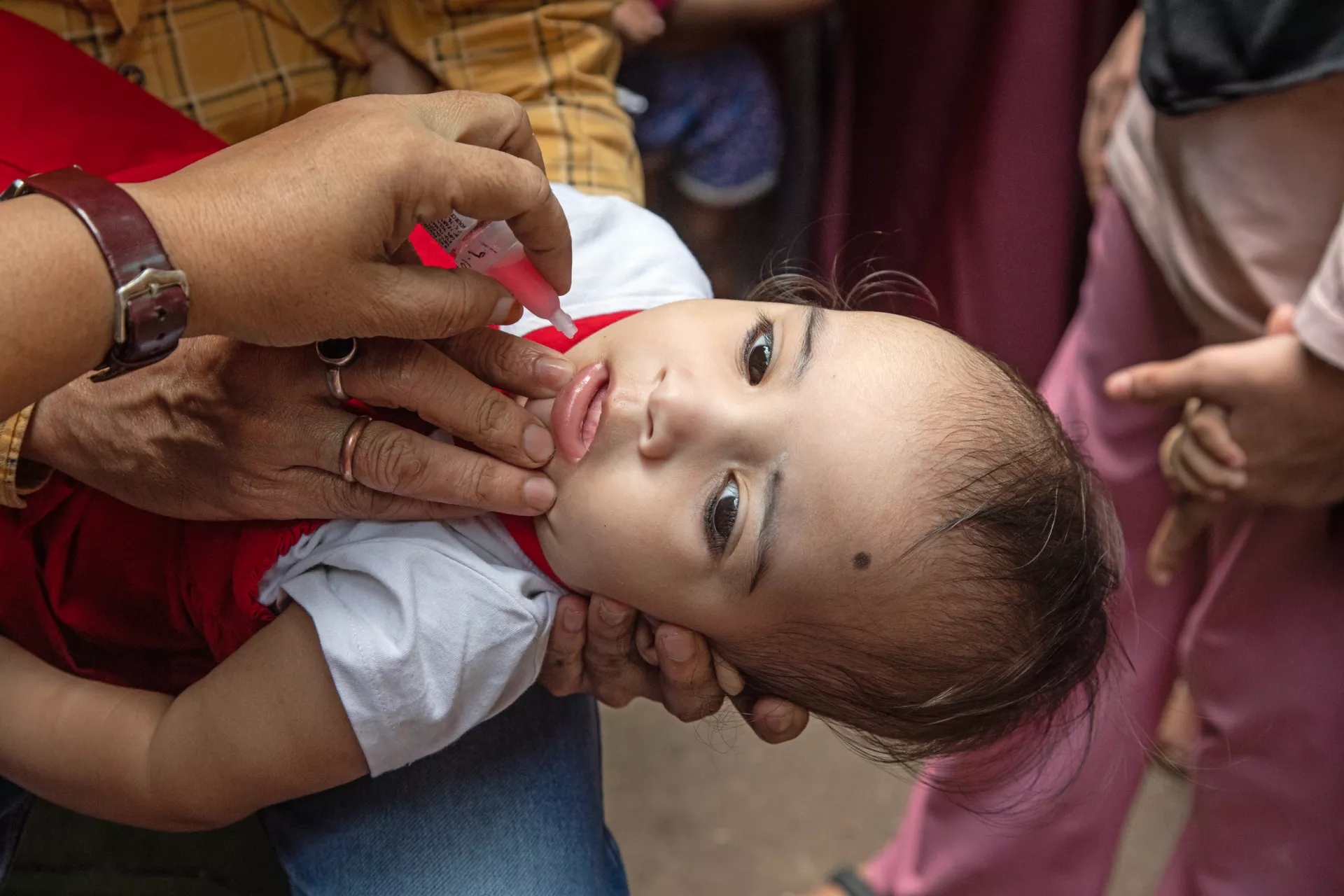
India’s relentless pursuit of universal vaccination has significantly reduced the proportion of zero-dose children in the population from 0.11% in 2023 to just 0.06% in 2024. This achievement, highlighted in the 2024 report of the UN Inter-agency Group for Child Mortality Estimation, positions India as a benchmark for child health on the global stage. The Ministry of Health and Family Welfare attributed this success to the country’s expansive Universal Immunization Programme, which currently protects against 12 vaccine-preventable diseases. Annually, the programme reaches approximately 2.9 crore pregnant women and 2.6 crore infants through over 1.3 crore immunization sessions conducted by Accredited Social Health Activists (ASHAs) and Auxiliary Nurse Midwives (ANMs).
India’s immunization drive has achieved comprehensive disease control milestones, most notably the eradication of polio in 2014, maternal and neonatal tetanus in 2015, and the national launch of the Measles-Rubella campaign in 2025. These efforts earned India the prestigious Measles and Rubella Champion Award earlier this year at the American Red Cross Headquarters in Washington, D.C., conferred by a consortium of international health agencies.
The impact of India’s immunization strategy is evident in the dramatic decline in mortality statistics. According to the UN Maternal Mortality Estimation Inter-Agency Group, India’s Maternal Mortality Ratio now stands at 80 per lakh live births—an 86% decline since 1990, compared to the global reduction of 48%. Similarly, the UNIGME 2024 report notes a 78% drop in Under-Five Mortality Rate and a 70% fall in Neonatal Mortality Rate between 1990 and 2023, surpassing global reductions of 61% and 54%, respectively.
Since 2014, the Universal Immunization Programme has expanded with the addition of six critical vaccines including IPV, RVV, PCV, Measles-Rubella, Adult JE, and Td, doubling the total to twelve. These vaccines tackle diseases like diarrhea, pneumonia, meningitis, and encephalitis, significantly reducing childhood mortality and morbidity. To further address the remaining zero-dose population, the Zero Dose Implementation Plan 2024 has been rolled out in 143 districts across 11 states, targeting high-burden zones with a focus on urban slums, peri-urban settlements, migratory communities, and vaccine-hesitant regions.
Mission Indradhanush, operational since 2014 and intensified in 2017, has so far vaccinated 5.46 crore children and 1.32 crore pregnant women who were previously unreached. India’s polio-free status has been maintained through regular National and Sub-National Immunization Days. Institutional frameworks like multi-tiered task forces at state, district, and block levels reinforce programme efficiency, while initiatives such as Village Health and Nutrition Days and regular IEC campaigns sustain community outreach.
India’s robust performance is bolstered by advanced digital tools such as the U-WIN platform, which tracks immunization records in real time, reducing dropout rates and ensuring seamless vaccine delivery. Public awareness campaigns across media formats and door-to-door sensitization efforts by healthcare workers further drive uptake.
Statistically, India now reports a DTP-1 (Penta-1) vaccine coverage of 93%, far ahead of countries with larger zero-dose burdens like Nigeria (70%), DR Congo (82%), and Ethiopia (86%). The DTP-1 to DTP-3 dropout rate has fallen from 7% in 2013 to 2% in 2023. Measles vaccine coverage rose from 83% in 2013 to 93% in 2023.
Despite having an annual birth cohort of 2.6 crore, which exceeds the entire population of several developed nations, India’s immunization rates stand on par with or exceed those of high-income countries such as New Zealand, Germany, and the United Kingdom. Official data confirms that India’s antigen-wise immunization coverage outpaces global averages across all major vaccines.
The Government of India has reiterated that comparisons with other nations must take into account India’s vast and diverse population and high absolute vaccination numbers. Its commitment to last-mile delivery and inclusive healthcare continues to underpin these extraordinary outcomes, making its immunization programme one of the most expansive and successful public health initiatives in the world.
