
The Ministry of Earth Sciences, in collaboration with the Embassy of France and the Embassy of Costa Rica, hosted the Second Blue Talks on May 20, 2025, at Prithvi Bhawan, Lodhi Road, New Delhi, marking a key milestone in the run-up to the 3rd United Nations Ocean Conference (UNOC3) scheduled to take place in Nice, France, from June 9 to June 13, 2025.
Building on the success of the first Blue Talks held in February 2024, the second edition convened scientists, policymakers, global stakeholders, and representatives from government, academia, industry, and civil society to accelerate action on ocean conservation and sustainable resource utilization. The forum was designed to galvanize concrete commitments aligned with the UNOC3 theme, reinforcing India’s proactive stance on marine sustainability.
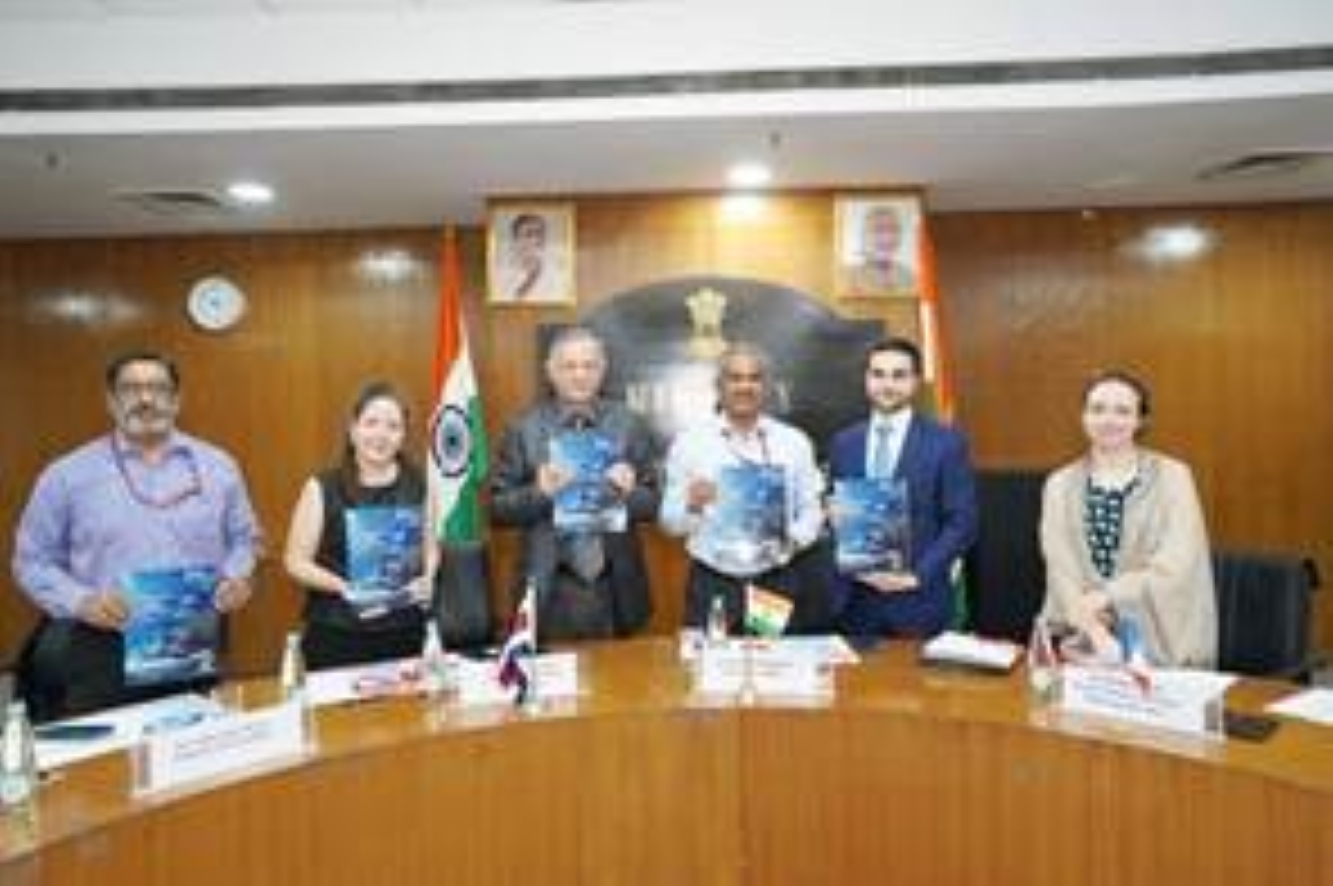
The event was chaired by M. Ravichandran, Secretary, Ministry of Earth Sciences, and co-chaired by Néstor Baltodano Vargas, Ambassador of Costa Rica to India, and Damien Syed, Deputy Head of Mission, French Embassy.
The Ministry launched a white paper titled “Transforming India’s Blue Economy: Investment, Innovation, and Sustainable Growth” during the conference, underscoring its commitment to enhancing the nation’s blue economy initiatives. As the nodal agency for blue economy implementation, the Ministry of Earth Sciences emphasized the need for cross-sectoral synergies, increased investments, and strategic policy frameworks to unlock the potential of India’s ocean resources.
The report highlights India’s extensive coastline and Exclusive Economic Zone, acknowledging collaboration across 25 ministries alongside coastal state and union territory initiatives aimed at fostering sustainable ocean-related growth. It integrates India’s G20 Presidency commitments and the Chennai High-Level Principles for a Sustainable and Resilient Blue Economy, solidifying its significance within the Viksit Bharat vision for 2047.
The white paper outlines a comprehensive approach to overcoming challenges, particularly in data sharing, private investment, and technology adoption. It identifies offshore wind energy, deep-sea exploration, and scalable interventions such as women-led seaweed farming, smart port development, and green ship recycling as key areas with transformative potential.
A dynamic stakeholder consultation session was held, centering on marine conservation, scientific cooperation, ocean pollution prevention, and the interconnectedness of climate and biodiversity. These themes reflect India’s commitment to long-term ocean sustainability and active participation in global marine governance frameworks.
The event also discussed India’s progress with ratifying the BBNJ Agreement, an important step toward strengthening international ocean biodiversity protections. Damien Syed remarked on the timeliness of India’s leadership in ocean sustainability, given the upcoming UNOC3 in June 2025.
The Second Blue Talks provided a platform for collaboration, problem-solving, and innovative strategies, fostering actionable solutions for sustainable ocean management. India reaffirmed its commitment to marine conservation, technological advancements, and responsible ocean governance, reinforcing its leadership in global blue economy initiatives.