
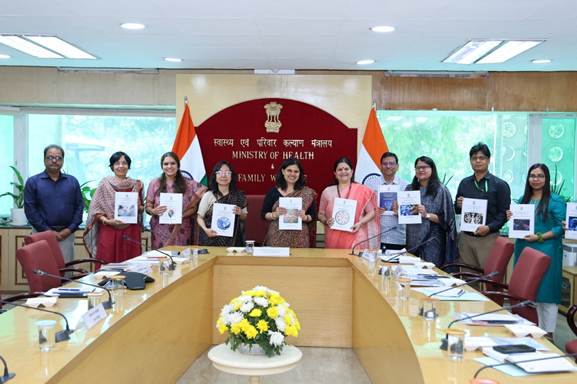
The Union Ministry of Health and Family Welfare, in collaboration with the National Commission for Allied and Healthcare Professions, has introduced competency-based curricula for ten allied and healthcare professions. This initiative aims to standardize education and training across the country, ensuring the development of globally competent professionals to address the increasing prevalence of diseases and the growing demand for allied healthcare services.
The newly launched curricula cover a wide range of professions, including physiotherapy, applied psychology and behavioral health, optometry, nutrition and dietetics, dialysis therapy technology, radiotherapy technology, medical radiology and imaging technology, anesthesia and operation theatre technology, health information management, and physician associates. These programs are designed to align with the evolving needs of the healthcare sector, both nationally and internationally, while fostering excellence and uniformity in education.
Union Health Secretary Punya Salila Srivastava emphasized the government’s commitment to capacity building and improving the quality of education in the healthcare sector. She highlighted that the curricula represent a pivotal step toward establishing consistency in educational content and delivery, setting a benchmark for healthcare professionals. She noted that these professions play a crucial role in preventive, promotive, curative, and rehabilitative healthcare, and the initiative is expected to enhance skill-based training, align educational outcomes with industry needs, and promote career mobility and professional recognition.
The curricula are built on principles of standardization, competency-based learning, and holistic development. They emphasize practical application, ethical practice, teamwork, and lifelong learning, moving beyond theoretical knowledge. The programs also aim to support universal health coverage by preparing a skilled workforce in critical areas such as physiotherapy and renal care.
Chairperson of the National Commission for Allied and Healthcare Professions, Yagna Shukla, stated that the curricula mark an important step toward actualizing the vision of “One Nation, One Curriculum.” She announced that the new curricula will be mandatorily implemented from 2026 and will be available on the NCAHP website. She also noted that this marks the first phase of the rollout, with curricula for other professional categories under the NCAHP Act, 2021, to be released subsequently.
The development of the curricula involved extensive consultations with academic experts, professional associations, and key stakeholders. The programs have been carefully aligned with the regulatory standards outlined in the NCAHP Act, ensuring relevance and rigor. The initiative also includes digital modules to enhance accessibility and capacity building, contributing to the vision of Swastha Bharat.
The launch event witnessed the participation of state council members and subject matter experts, reflecting a shared commitment to advancing standardized, high-quality education in allied and healthcare professions. The newly introduced handbooks provide clear guidelines on course content, eligibility criteria, training methods, and institutional infrastructure requirements, establishing a unified national standard for healthcare education.
This initiative underscores India’s leadership in skilling healthcare professionals not only for domestic needs but also for global healthcare demands. By fostering innovation, standardization, and excellence, the new curricula aim to elevate India’s position in healthcare education and contribute to a more robust and equitable healthcare system.