
India’s Extended Reality innovators showcased an unprecedented wave of creativity and technological advancement with the conclusion of the XR Creator Hackathon, a key feature of the Create in India Challenge Season-1. This initiative was launched as part of the World Audio Visual and Entertainment Summit, organized by the Ministry of Information and Broadcasting in collaboration with Wavelaps. The hackathon aimed to accelerate India’s prominence in immersive technologies, encompassing areas like healthcare, education, tourism, digital media, entertainment, and e-commerce.
The event attracted over 2,200 participants nationwide, including students, professionals, and entrepreneurs, with 66 percent hailing from Tier 2 and Tier 3 cities, reflecting India’s democratization of technological innovation. From initial registrations to the final rounds, the competition engaged talent aged 17 to 35 years, with a commendable 19 percent representation of women among the 40 finalist teams. The process culminated in a virtual announcement ceremony streamed live on YouTube, where five winning teams emerged, each redefining the scope of Extended Reality in their respective themes.
In the Educational Transformation category, the team XR Runners, comprised of students from IIT Kharagpur, was awarded top honors for their project Eduscape XR. Designed to address the lack of laboratory infrastructure in schools, this VR-based platform enables students to conduct immersive experiments in physics, chemistry, and biology, combining hand-tracking and AI-driven feedback. Team leader Vedanta Hazra expressed their vision to revolutionize STEM education by making practical learning accessible even in resource-constrained settings.
The Healthcare, Fitness, and Well-being category was dominated by Team Cognihab, whose XR-powered rehabilitation solutions focus on aiding recovery from conditions such as lazy eye, strokes, and anxiety. The project, led by Rishab Kapur, exemplifies how immersive technologies can create transformative real-world applications within medical settings.
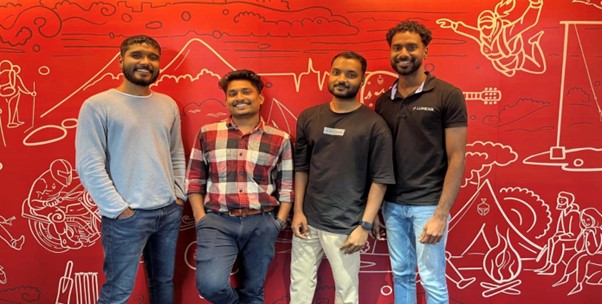
The team LumeXR won in the Immersive Tourism category with their mixed-reality travel guide, which integrates drone-shot photogrammetry, 3D mapping, and video storytelling. The platform allows users to virtually experience destinations, offering an engaging and efficient alternative to conventional tourism tools. LumeXR’s vision extends to creating cultural connections and more informed travel planning experiences.
The E-Commerce and Retail Transformation award went to Team EMO for their project Heaven Estate. This AR and 3D platform bridges homeowners and designers, enabling users to visualize interior designs collaboratively. By prioritizing a seamless user-designer interaction, the platform enhances decision-making processes and brings personalized design services into the digital realm.
In Digital Media and Entertainment, Team Youth Buzz clinched victory with their multiplayer VR game, Immersive Warfare Simulator. This project offers cross-platform gameplay, combining tactical realism with immersive technologies to redefine user engagement across gaming ecosystems.
The hackathon’s reach extended beyond just competitive innovation, nurturing diversity and inclusion in India’s burgeoning XR landscape. Notably, it revealed an evolving demographic, with strong contributions from women and participants from underrepresented urban tiers. Support from Wavelaps, BharatXR, and XDG played a crucial role in empowering these innovators to turn their ideas into reality.
The winning teams are now preparing to exhibit their projects at the WAVES Summit, a landmark event for the media and entertainment sector, to be held in Mumbai from May 1 to 4, 2025. This global platform will serve as a launchpad for the winning projects, connecting these creative minds to investors, industry experts, and international audiences. The summit promises to elevate India’s standing as a global hub for content creation, intellectual property, and XR innovation.
As the Ministry of Information and Broadcasting continues to support initiatives like the XR Creator Hackathon, India is poised to lead the charge in redefining how immersive technologies transform learning, healthcare, entertainment, and daily life. These projects exemplify the potential of Extended Reality to bridge technological gaps, inspire inclusivity, and carve pathways for a future that blends innovation with human-centric solutions. Through the hackathon, India has reasserted its commitment to building a vibrant and forward-thinking digital ecosystem.